South Africa - Africa with Many Faces
South Africa is one of the most diverse countries on the African continent. The country offers not only breathtaking natural scenery, but also a rich history that is still visible today in its cities and everyday life. What makes South Africa truly exceptional is its incredible variety – here you can admire wildlife on safari, dramatic coastlines washed by both the Atlantic and Indian Oceans, vineyards around Cape Town, mountain landscapes and vibrant cities full of life.
Interesting Facts About South Africa
The Rainbow Nation
Just a few decades ago, South Africa was a country deeply divided by the invisible walls of apartheid – a system that, from 1948 onwards, strictly separated white and black people and denied the majority of the population basic human rights. Change came with Nelson Mandela, who, after 27 years in prison, managed to turn suffering into forgiveness and became the country’s first Black president in 1994. The “Rainbow Nation” was born – a symbol of reconciliation and hope.
Although South Africa today formally guarantees equality for all, economic and social inequalities remain. The white minority still largely lives in better conditions, while many Black communities continue to struggle with poverty. Yet the country is slowly changing – a Black middle class is growing, mixed families are becoming more common, and the younger generation is growing up with the belief that the future can truly be as colourful as the rainbow Mandela once promised.
In the Shadow of Crime
South Africa, a country of breathtaking nature and cultural diversity, also struggles with one of the highest crime rates in the world. The reasons reach deep into the past: the legacy of apartheid, severe social inequality, poverty, unemployment and distrust in institutions have created an environment in which crime is an everyday reality for many people.
The most affected areas are major cities such as Johannesburg, Pretoria, Durban and Cape Town, where car theft, armed robberies and burglaries are common. Each year, the police record more than 20,000 murders and hundreds of thousands of property crimes. A stark contrast can be seen between wealthy neighbourhoods with fenced houses protected by private security companies and, just beyond them, sprawling townships full of dust, rubbish and corrugated-iron shacks.
Although the situation is serious, most violent crime takes place away from tourist routes, and with normal caution, travelling is usually safe. The government and local communities are fighting crime through neighbourhood patrols, modern security systems and youth programmes. South Africa thus remains a country of great contrasts – where the beauty of mountains and oceans meets the shadows of crime, yet hope and the desire for change endure.
A Land of a Thousand Landscapes
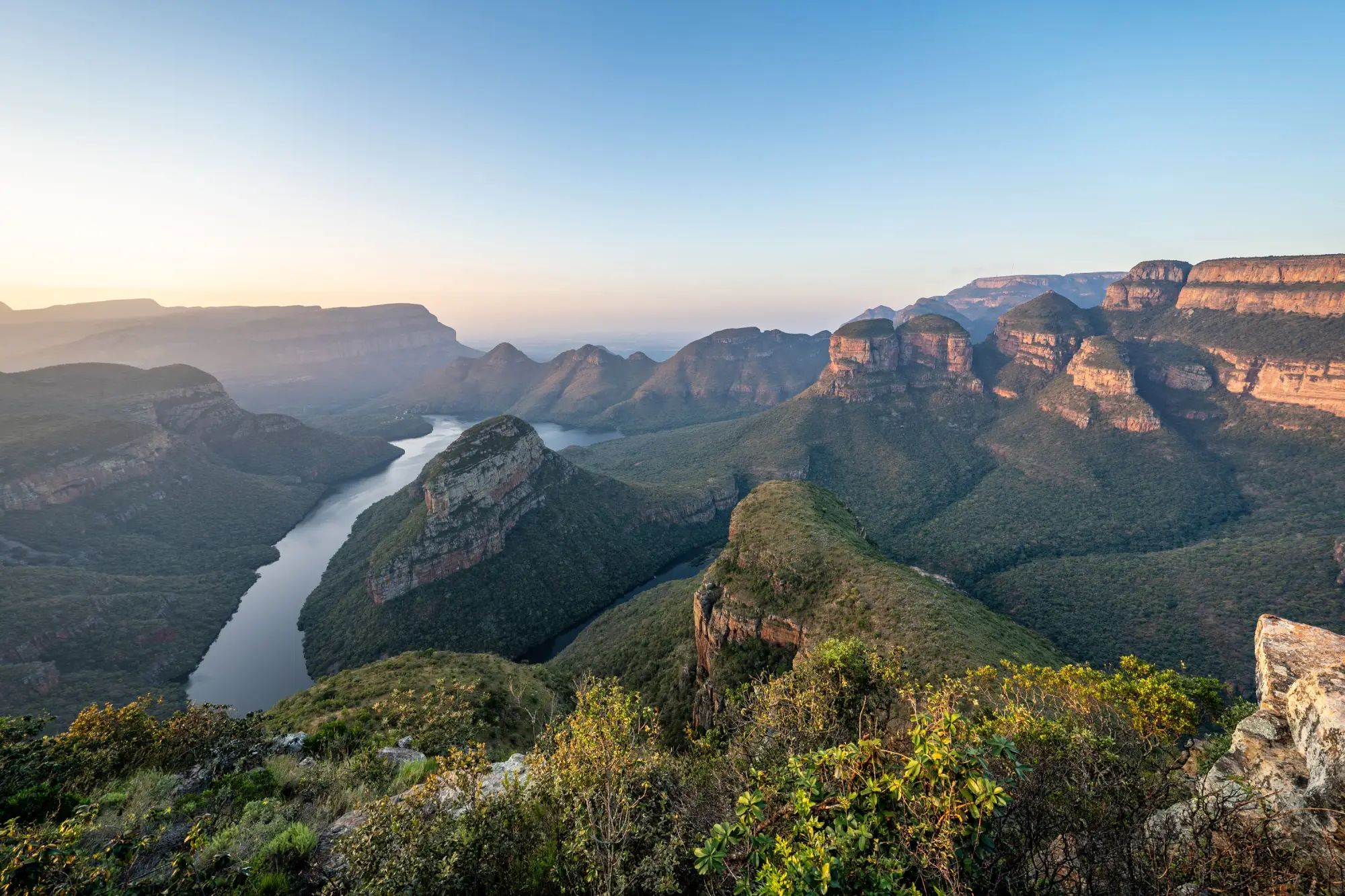
South Africa is a country of incredible contrasts, where deserts, mountains, savannas, vineyards and dramatic coastlines all meet within a single territory. In the east rise the majestic Drakensberg Mountains, with waterfalls, alpine meadows and ancient rock paintings created by the region’s original inhabitants. The north of the country belongs to the wild nature of Kruger National Park, where you can observe the “Big Five” – lions, elephants, leopards, rhinos and buffalo – often literally just a few metres from your car.
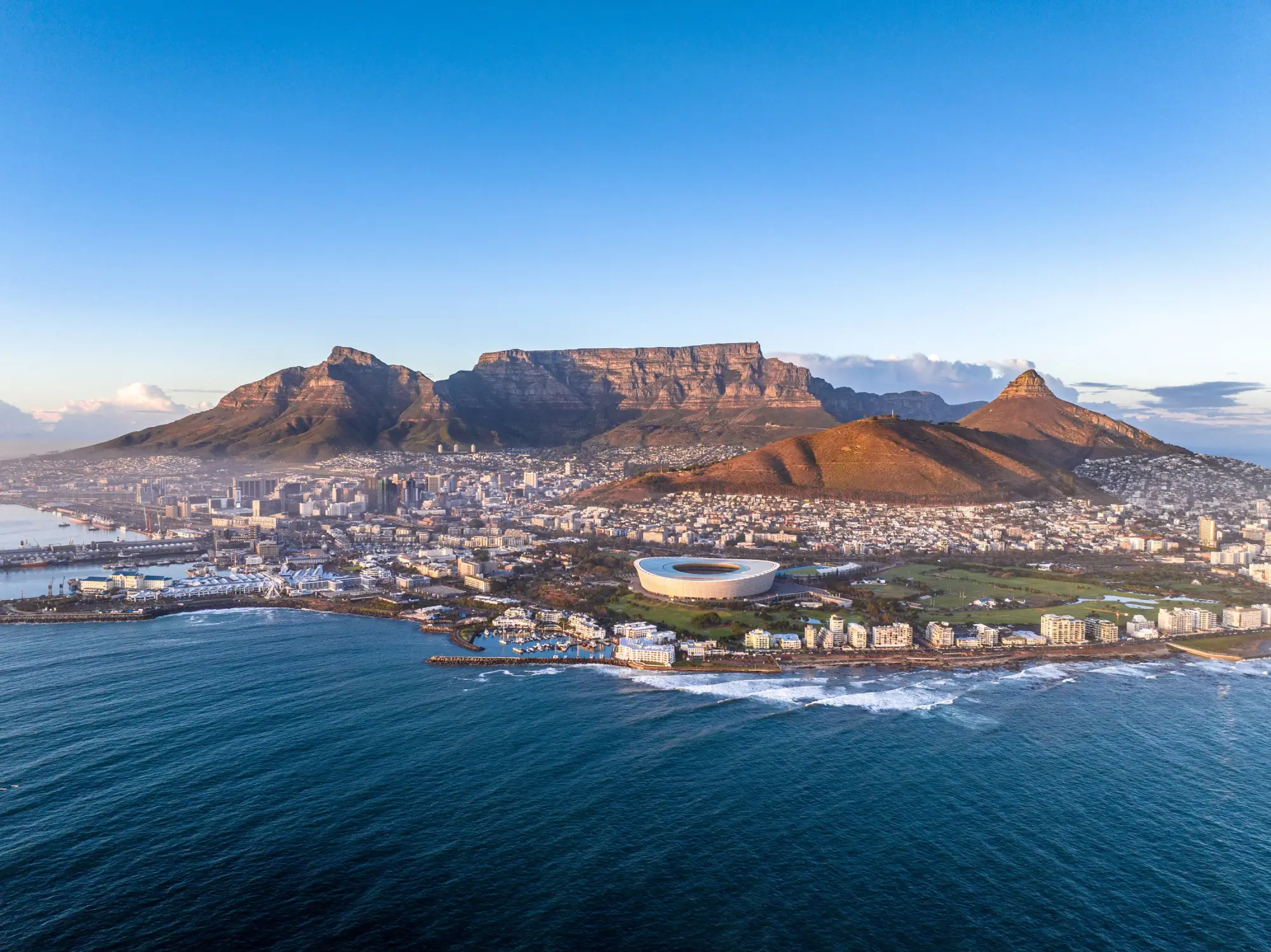
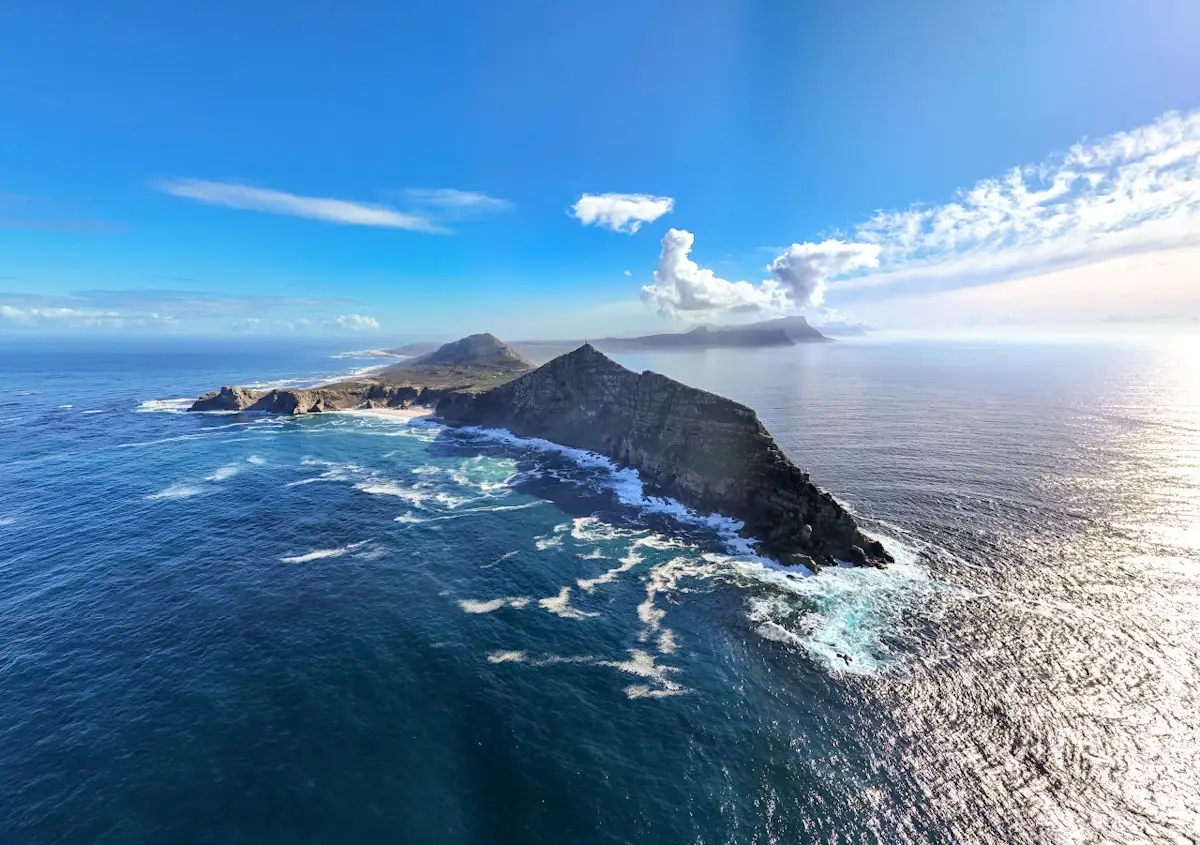
The western regions of the Kalahari and Karoo offer silence, red sand and a legendary night sky that is among the clearest in the world. In the south, the Cape Peninsula dominates the landscape with its iconic Table Mountain, penguin colonies and the dramatic cliffs of the Cape of Good Hope. Just a few hours’ drive away stretches the famous Garden Route – one of the most beautiful coastal roads in the world – where eucalyptus forests, lagoons and turquoise bays alternate along the way.
Nor should one forget the vast vineyards around Stellenbosch and Paarl, where some of the finest wines in the southern hemisphere are produced. South Africa is, in short, a mosaic of landscapes that change almost with every kilometre – a country where nature reveals itself in all its colours and each region tells a completely different story.
Our Trip To South Africa
Length of stay: 5 weeks – May 2024, August/September 2024 (children aged 8 and 9)
Accommodation:
Iketla Lodge
Honey Guide Khoka Moya Tented Camp
La Kruger Lifestyle Lodge
Mogi Boutique Hotel
Rhino River Lodge
Umzolozolo Private Safari Lodge
Ocean View House
Ukutula Bush Lodge
Petite Provence
Sandals Guest House
Elephant Hide of Knysna
De Denne Country Guest House
and others…
Restaurants:
The Chubby Pig Eatery – Uitspanning
Hoedspruit Brewing Co. – Hoedspruit
Chokka Block – St. Francis Bay
Al Pescatore – Ballito
Den Anker – Cape Town
Gold Restaurant – Cape Town
Hussar Grill – Cape Town
Beluga Cape Town – Cape Town
Hard Rock Cafe – Cape Town
We visited South Africa twice within one year – first at the turn of May and June, and then again at the turn of August and September. Although we travelled to the country with some concerns about safety, nothing bad happened to us in the end, and we were able to fully enjoy this southernmost African country.
Both trips were planned for us by a travel agency, which meant that each time we had a perfectly arranged itinerary including all the important and interesting places. In South Africa, it is hard to decide what to see first – from safari and the wild coastline of two oceans to the modern beauty of its cities. Everything here is simply beautiful.
In South Africa, people drive on the left, and the usual approach is to drive yourself. It is not like in Uganda, Tanzania or Kenya, where you are driven around by a driver throughout the trip – here it is more similar to Namibia, where everyone travels independently. At first, driving on the left feels like a bit of an adventure, especially right after landing, but you get used to it fairly quickly. The advantage is complete freedom and control over your own time.
Driving after dark is not recommended for safety reasons. Local drivers often do not use lights, some drive under the influence of alcohol, and the roads can be in very poor condition in places. Driving at night is therefore quite risky. Even during the day, you need to stay alert – in smaller towns, people often cross the road without paying attention to traffic. Unfortunately, we even witnessed a fatal accident involving a pedestrian and a car.
We recommend that tourists do not get involved in anything and do not help strangers – it may be a trap, and you could become the victim of a crime. We are not saying that this happens everywhere, but caution is definitely advisable. If a robbery does happen, never resist and give the attackers everything they ask for.
We do not want to scare anyone or discourage people from visiting this amazing country, but it is important to be aware of the reality. Fortunately, nothing happened to us – we avoided suspicious places, did not get into unnecessary conversations with strangers, and whenever something felt like trouble, we left immediately.
And now let us move on to a more pleasant part of the story – safari.
Safari
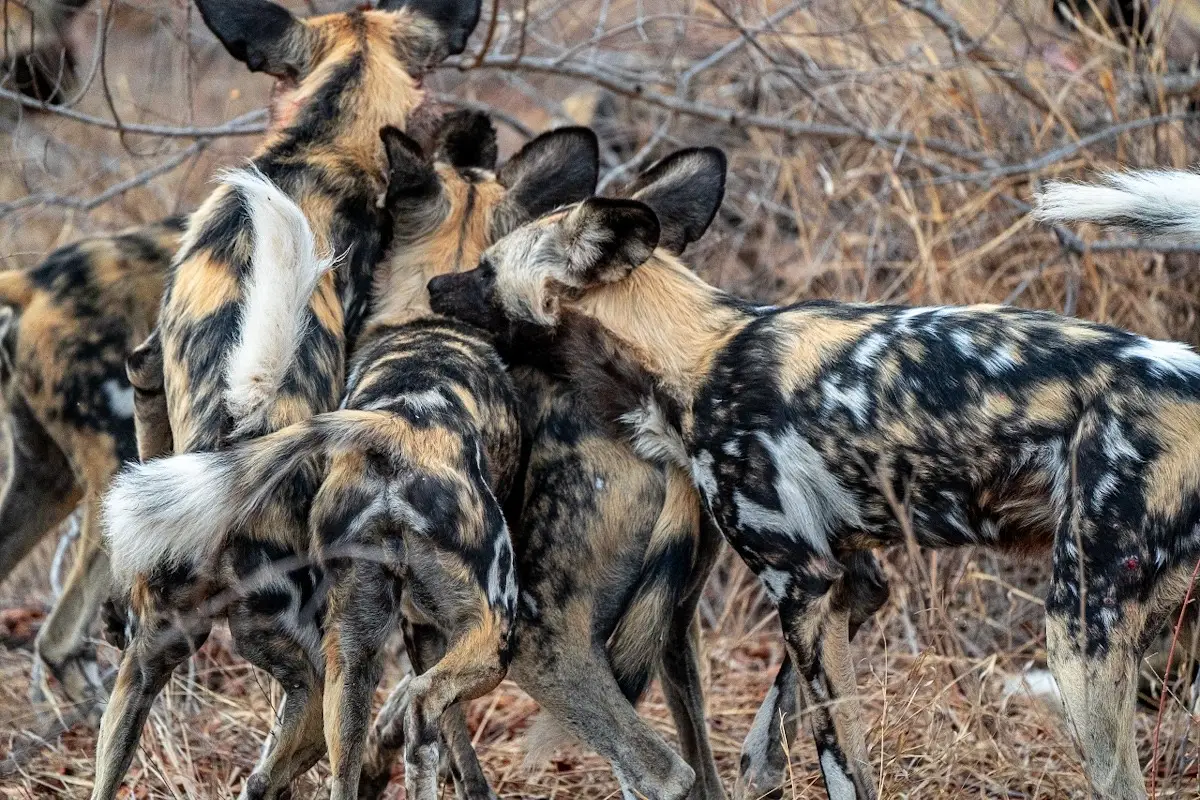
South Africa is one of the places where you have a relatively good chance of seeing African wild dogs. During our travels through Uganda, Tanzania, Kenya, Namibia and Botswana, we never came across them – it was only here that we were finally lucky. Perhaps that was also one of the reasons why we returned after our first visit. The first time, we did not manage to see them, but on our second trip we had an entire large pack almost within reach. So the return was definitely worth it.
Critically endangered rhinos also live here. Unlike in some other countries, in South Africa their horns are often removed as a preventive measure so that they do not become targets for poachers. Each country approaches the protection of these animals a little differently.
Safari drives usually take place early in the morning, roughly until 10 a.m., and then again in the late afternoon until dusk, as animals are least active around midday and tend to hide in the bush. We stayed at Honeyguide Safari Tented Camp, where elephants regularly came to drink by the pool. We were lucky enough to see them just about an hour after our arrival.
It was an incredibly adrenaline-filled experience – sitting completely still and watching these giants pass only a few metres away from you. An elephant can be very dangerous, especially an older solitary male, which has often been pushed out of the herd and may be frustrated. And exactly two such males appeared near us at the same time. Fortunately, everything remained calm.
You can go on safari either in Kruger National Park, where most people drive themselves and the chances of truly exceptional sightings are somewhat lower, or in one of the private game reserves. There, guided game drives take place twice a day, with the guide staying in contact with the others by radio. You can simply sit back and enjoy watching the animals. For us, this was clearly the best option.
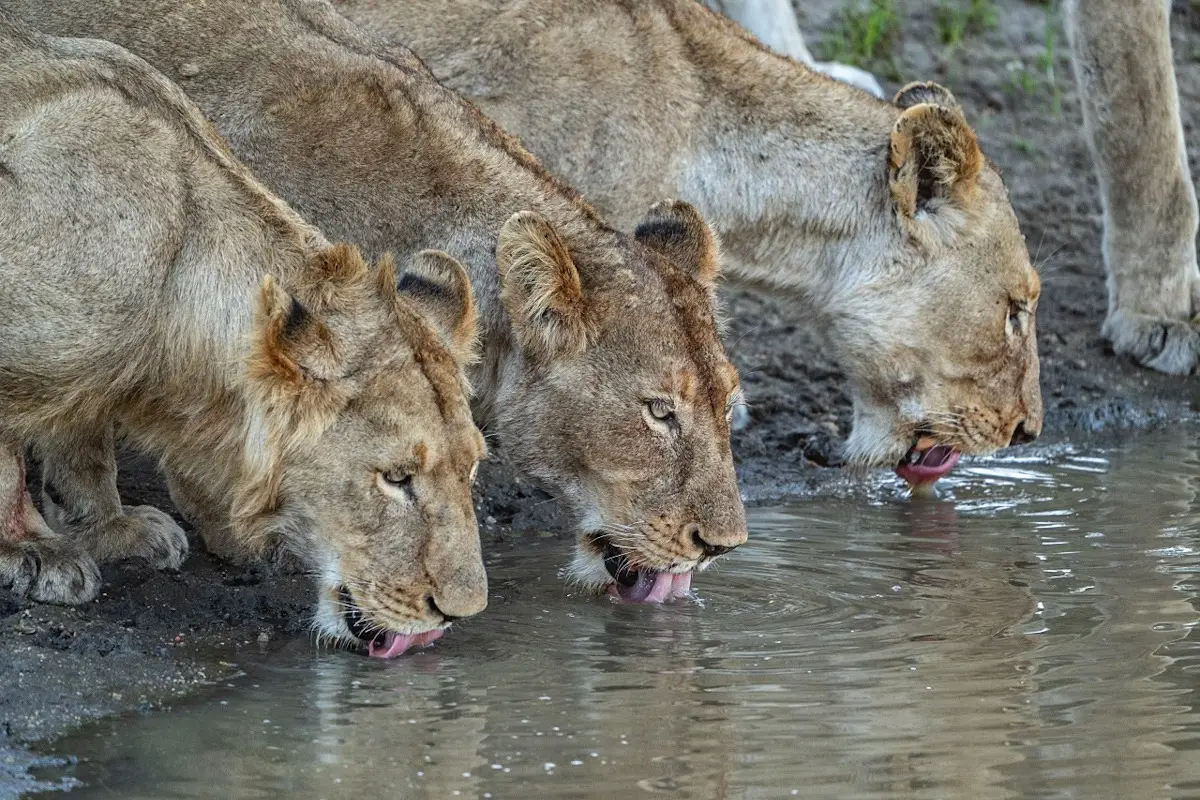
We saw almost everything – elephants, giraffes, zebras, jackals, antelopes, hyenas, African wild dogs, leopards, lions, cheetahs, white rhinos and even one black rhino, vultures, eagles, ostriches and meerkats. For meerkats, the area around Oudtshoorn is ideal.
Ostrich Farms
In the area around the town of Oudtshoorn, ostrich farming is one of the main sources of livelihood for the local people. It is therefore no surprise that restaurant menus in the area feature mainly ostrich meat, while shops are full of ostrich souvenirs.
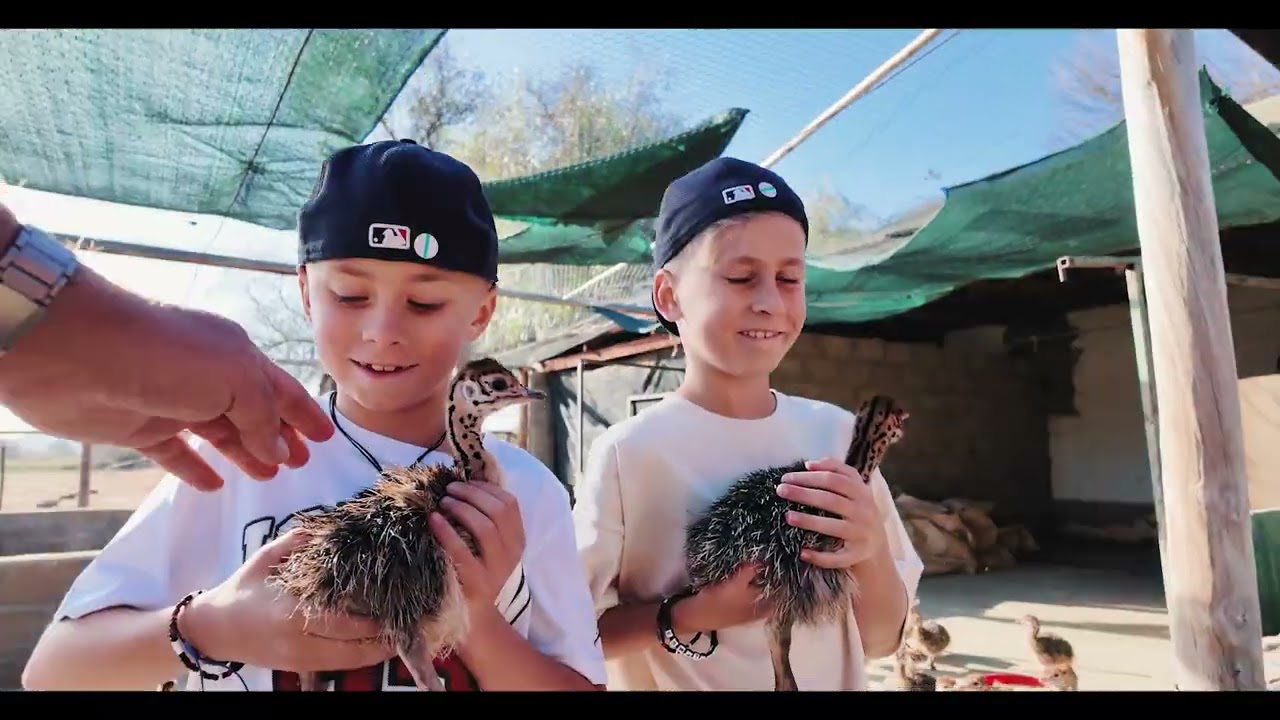
We visited Highgate Ostrich Show Farm. We were given a guide who was incredibly funny and told us lots of interesting facts about ostriches. We even got to hold three-day-old chicks – or rather chicks that already looked quite big, because ostriches grow incredibly fast. Ostriches raised for meat are slaughtered at no more than 16 months of age, as the meat is said to become less tasty later on. If ostriches are sold, the buyer usually collects them after just 10 days.
In order to digest food properly, an ostrich also needs to swallow small stones, which help grind the food in its stomach. One ostrich egg is said to be able to withstand a weight of up to 140 kg. If you want to boil an ostrich egg, it has to be cooked for at least two hours, and in terms of volume it is roughly equivalent to 24 chicken eggs – although apparently it tastes exactly the same.
An ostrich can be an extremely dangerous animal. It can kill a person by slashing their throat with its claw or tearing open their stomach. And if you lie down on the ground, it can break your bones. Running away is pointless – the ostrich is the second-fastest animal over short distances and can reach speeds of up to 70 km/h. The only way to stay safe from an ostrich is to come up with something taller than the bird itself – or, apparently, branches of thorny acacia will do. Ostriches are very protective of their sensitive eyes, and the thorns could injure them.
In the past, ostrich feathers were highly prized – one kilogram was worth as much as one kilogram of gold, as they decorated the hats of court ladies all over Europe. Ostrich leather is the second strongest after kangaroo leather and is also very expensive. It is used, for example, to make Hermès handbags.
When ostriches form a pair, the female usually lays an egg in the nest every other day. Once there are 15 eggs in total, she starts sitting on them – not because she can count, but because she simply senses it. The chicks then hatch all at once, even though the first egg may be a month older than the last one.
If the male in a pair dies, the female remains alone forever. If the female dies, the male finds a new mate. Perhaps you did not know these facts about ostriches either – and we can only hope that our guide was not making anything up and pulling our leg.
Garden Route
This is the name given to the entire route that follows the coast from Durban all the way to Cape Town and is considered one of the most scenic coastal routes in the world.
The Drakensberg Mountains are the highest mountain range in South Africa and stretch along the border with Lesotho. They are known for their steep cliffs, deep valleys and beautiful waterfalls. Thanks to their extensive hiking trails, the mountains are a popular destination for tourists. In August, however, everything was unfortunately completely dry, so none of the waterfalls were flowing.
In the end, we skipped the city of Durban, as it did not appeal to us at all, and drove straight on to Salt Rock – which turned out to be a very good choice. It is a small, cosy coastal town and we found it very pleasant. We stayed at the wonderful little French-style hotel Petite Provence, which was absolutely fantastic. The final highlight was dinner at the Italian restaurant Al Pescatore.
Another beautiful place on the coast is the town of St. Francis Bay – with cliffs, big waves, a popular surfing spot and a luxury residential area built around the bay, which looks like a modern version of Venice thanks to its many waterways. The seafood restaurant Chokka Block is also excellent.
Other places worth visiting include Knysna, Plettenberg Bay and the bird park Birds of Eden, where you can see macaws, cockatoos, budgies and also Knysna parrots up close. These parrots live only in South Africa, specifically in the area around Knysna, and are a symbol of the local nature. What makes the park so special is that it is basically one huge aviary: the birds fly wherever they like, and you can see them within arm’s reach, without any distracting cages. We even stroked a cockatoo – although it was not allowed – but he was simply irresistible: he was showing off and, most importantly, clearly enjoyed being stroked.
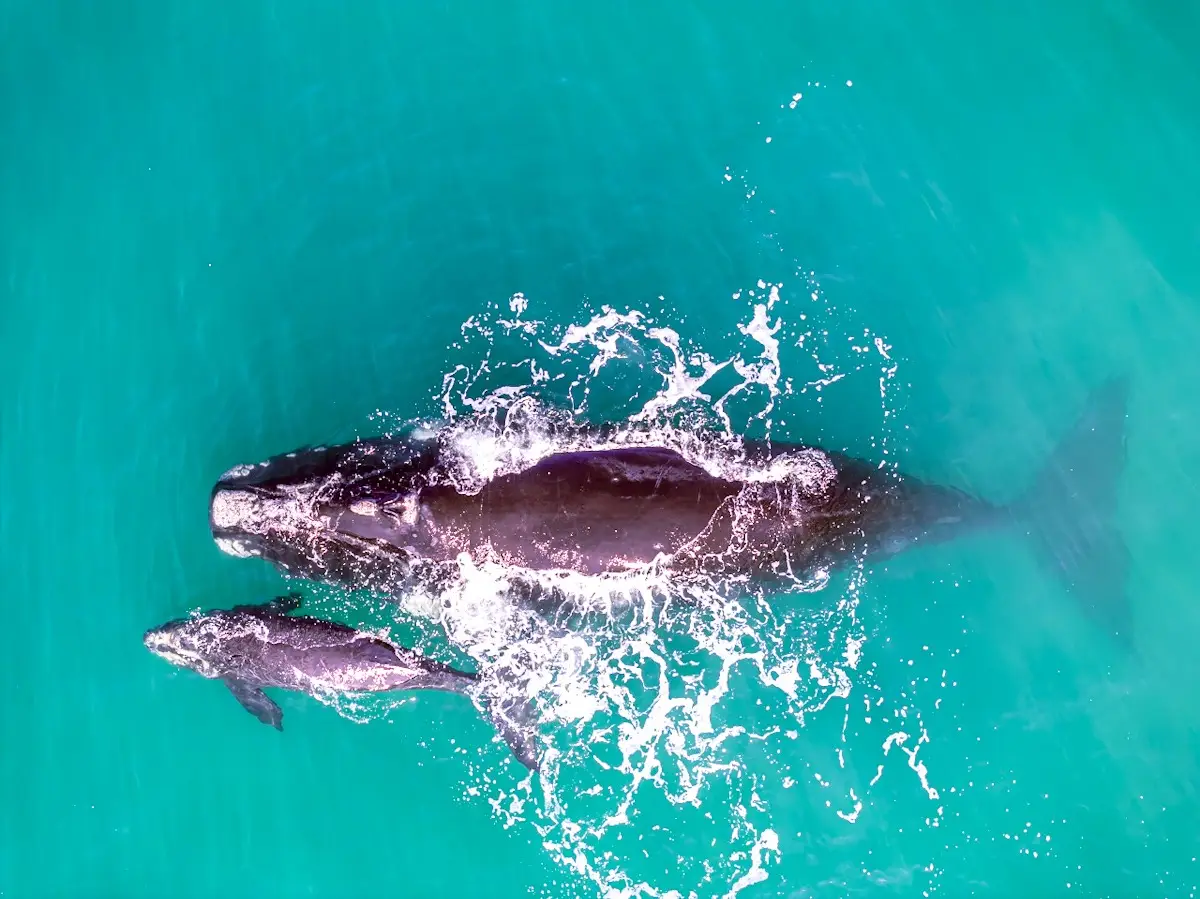
At the southernmost tip of Africa lies Cape Agulhas, where the two oceans – the Indian and the Atlantic – also meet. August is also the season of southern right whales, so there is a high chance of seeing whales even from the shore. And indeed, we saw them several times. Sometimes they were quite far away, but at other times they were clearly visible to the naked eye. For moments like these, a drone is ideal: you can calmly fly from the shore out towards the whale and capture amazing footage.
The last place before Cape Town that we would definitely recommend was the town of Hermanus. We went whale watching there several times and were successful every time. On one trip, however, the waves were very big – and luckily the children had stayed asleep in the hotel room. On the way back, the waves got even worse, everyone sitting at the front or anywhere outside was ordered inside, and half the tourists were vomiting. Fortunately, we did not get seasick, but there were a few moments – perhaps more than a few – when we wondered whether the boat would make it safely back to the harbour. On the other hand, it was also the first time we saw whales jumping so close to us, because they seem to enjoy the waves and become much more playful.
On the way to Cape Town, we also passed two places – Betty’s Bay and Boulders Beach, both home to large colonies of African penguins. At the turn of May and June there were significantly more of them there; in August, there were considerably fewer. Just before reaching Cape Town and the end of the Garden Route, there is Muizenberg Beach – an ideal surfing beach, famous for its colourful changing huts.
Cape Town
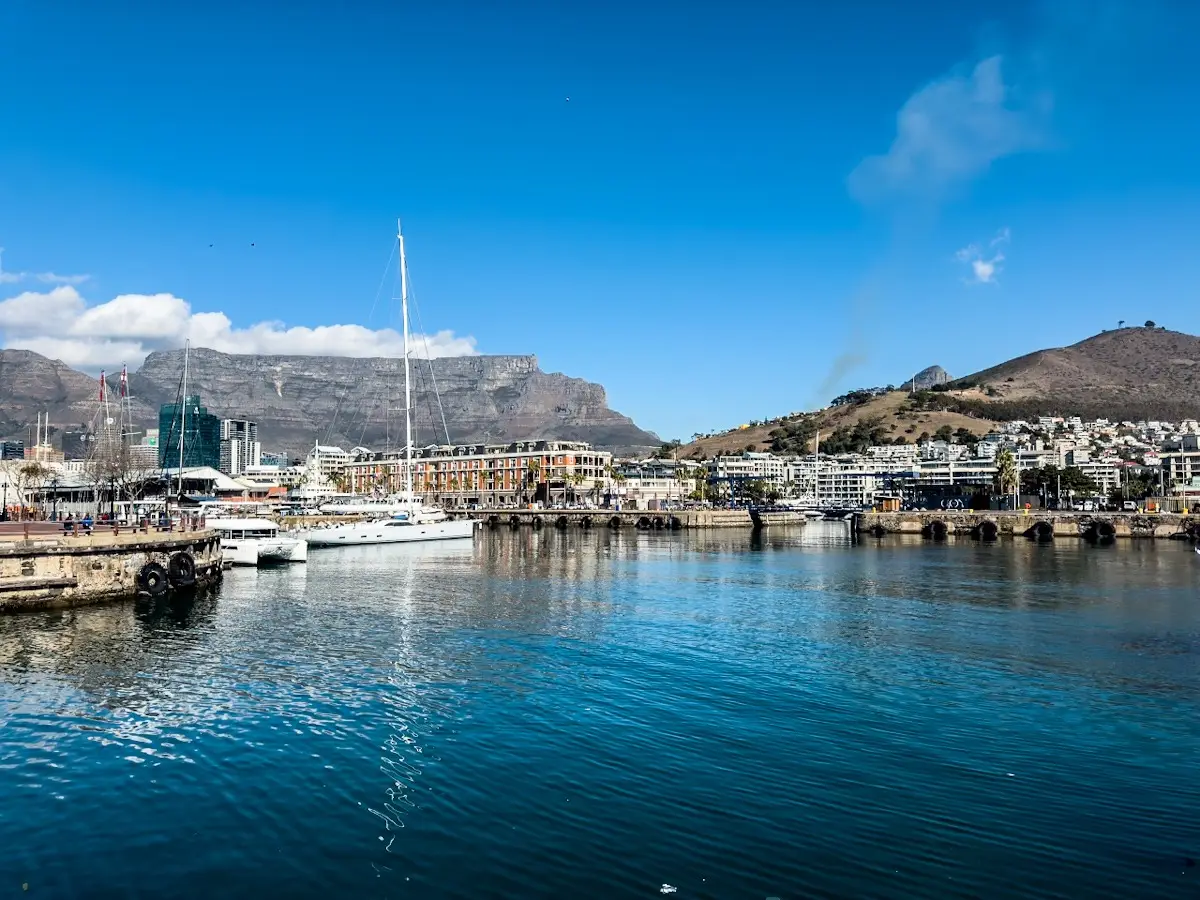
Cape Town is one of the most beautiful cities in the world – it lies between the Atlantic Ocean and the majestic Table Mountain, which, together with Lion’s Head, forms the iconic backdrop of the entire coastline. You can reach the top of Table Mountain either on foot or by cable car. We took the cable car, as we had saved this place for our last day before flying home. From the top, there are beautiful views of the city, and rock hyraxes can be seen hopping around everywhere.
Signal Hill is a great place to relax, go for a walk or have a picnic, and it also offers wonderful views of both the city and Table Mountain. The V&A Waterfront has a lively atmosphere, with shops, restaurants and views of historic Robben Island, where Nelson Mandela was imprisoned. You can reach the island by boat and take a guided tour there.
Another landmark of the city is Cape Town Stadium, built for the 2010 FIFA World Cup, which today is used mainly for rugby. One of the most colourful and most photographed neighbourhoods is Bo-Kaap. It lies on the slopes of Signal Hill and is famous for its brightly painted houses and cobbled streets. To be honest, we really wanted to take photos there, but even at 10 in the morning we did not feel comfortable stopping the car there, let alone getting out, so we simply drove quickly through the neighbourhood and left.
We also had an experience dinner at Gold Restaurant. When guests are seated at the table, they are given drums, and a tasting menu from all corners of Africa is served. Anything you particularly like can be ordered again. The dinner is accompanied by live African music and dancing, and you can even have African patterns painted on your face. In short, it is a feast for all the senses.
About an hour and a half by car from Cape Town lies the Cape of Good Hope. It is an amazing place with views of the rocky coastline cutting into the ocean. From the car park, there is a short uphill walk, but the view is beautiful and definitely worth it. Ideally, take a drone with you and find a quiet spot away from the crowds to capture some great footage.
Eswatini
On our journey through South Africa, we also passed through the Kingdom of Eswatini, formerly known as Swaziland, and spent one night there. It is a small kingdom between South Africa and Mozambique, ideal for two to four days of slow travel, with short driving distances, affordable accommodation and a friendly atmosphere. The best time to visit is during the dry season, from May to September. People drive on the left, and South African rand are accepted everywhere alongside the local lilangeni.
With normal caution, the country feels safe, the roads are decent and the parks are compact. Eswatini is therefore a great, quieter “mini-Africa” within easy reach of both Kruger and the Drakensberg Mountains. The only thing that may test your patience a little is the border control. You have to go through about four different counters, receiving a stamp or confirmation at each one. Perhaps they simply need to keep the officials busy – we could not see any other purpose in it. Luckily, there was no queue when we crossed; otherwise, we might still be standing there today.
We also went to see traditional tribal dances and visited an old village where people show how life in Africa used to be – and perhaps, in some places, still is today.
Our Tips
What to Visit: Make sure to visit at least one, but preferably several, private game reserves. Go for a hike in the Drakensberg Mountains, take a whale-watching boat trip in Hermanus, and your journey should definitely include Cape Town and a visit to Table Mountain.
Restrictions for Children: We did not encounter any restrictions in South Africa. However, we recommend carrying copies of the children’s birth certificates with you.
Food Tips: Make sure to try ostrich meat, enjoy any kind of seafood on the coast, and, as is often the case in Africa, do not miss the excellent creamy vegetable soups served almost everywhere. We also had great hot dogs at Hoedspruit Brewing Co.
What Not to Do: Be careful on the N2 road between Durban and East London / Port Elizabeth. For the most part, it is a single-lane road with a badly damaged surface, and in some places there was barely any asphalt at all. Plan for the journey to take longer than Google Maps, for example, might suggest. Do not drive after dark and do not get into conversations with strangers.
From the sun-drenched Cape region and the majestic Drakensberg Mountains to vibrant Johannesburg, South Africa offers countless experiences and endless reasons for admiration. Whether you are drawn here by a desire for adventure, discovery or inspiration, this country can leave an indelible mark on your heart as a place truly worth returning to.
More photos can be found at Gallery - South Africa