Namibia - Land of Contrasts
The country's name is derived from the Namib Desert, which is considered one of the oldest deserts in the world. Namibia offers not only stunning natural scenery but also the rich culture of its indigenous peoples. The legacy of its German colonial past is still visible throughout the country. Given its vast size, the best way to explore Namibia is by car. What makes the country particularly fascinating is the opportunity to admire the beauty of the Atlantic coastline, experience the diversity of its deserts, and at the same time enjoy its abundant wildlife and the dramatic mountain landscapes of its canyons.

Interesting Facts About Namibia
Modern Africa with a German Heritage
Namibia was a German colony from the late 19th century until the end of the First World War, when it came under the administration of the Union of South Africa. German influence remains evident today in the country's architecture, cuisine, and many aspects of its culture. Cities such as Swakopmund and Lüderitz are known for their well-preserved German colonial architecture. Buildings that resemble traditional German villages create a unique atmosphere unlike anywhere else in Africa. German festivals, such as Oktoberfest, are also celebrated in Namibia. Local residents have embraced many German traditions and incorporated them into their daily lives. German is still used in business and tourism, although English is the country's official language.
Diverse Landscapes
Namibia is known for its incredible diversity of landscapes, ranging from ancient deserts to green oases and dramatic mountain regions. This remarkable variety makes the country an ideal destination for nature lovers and adventurers alike.
Deserts and Dunes
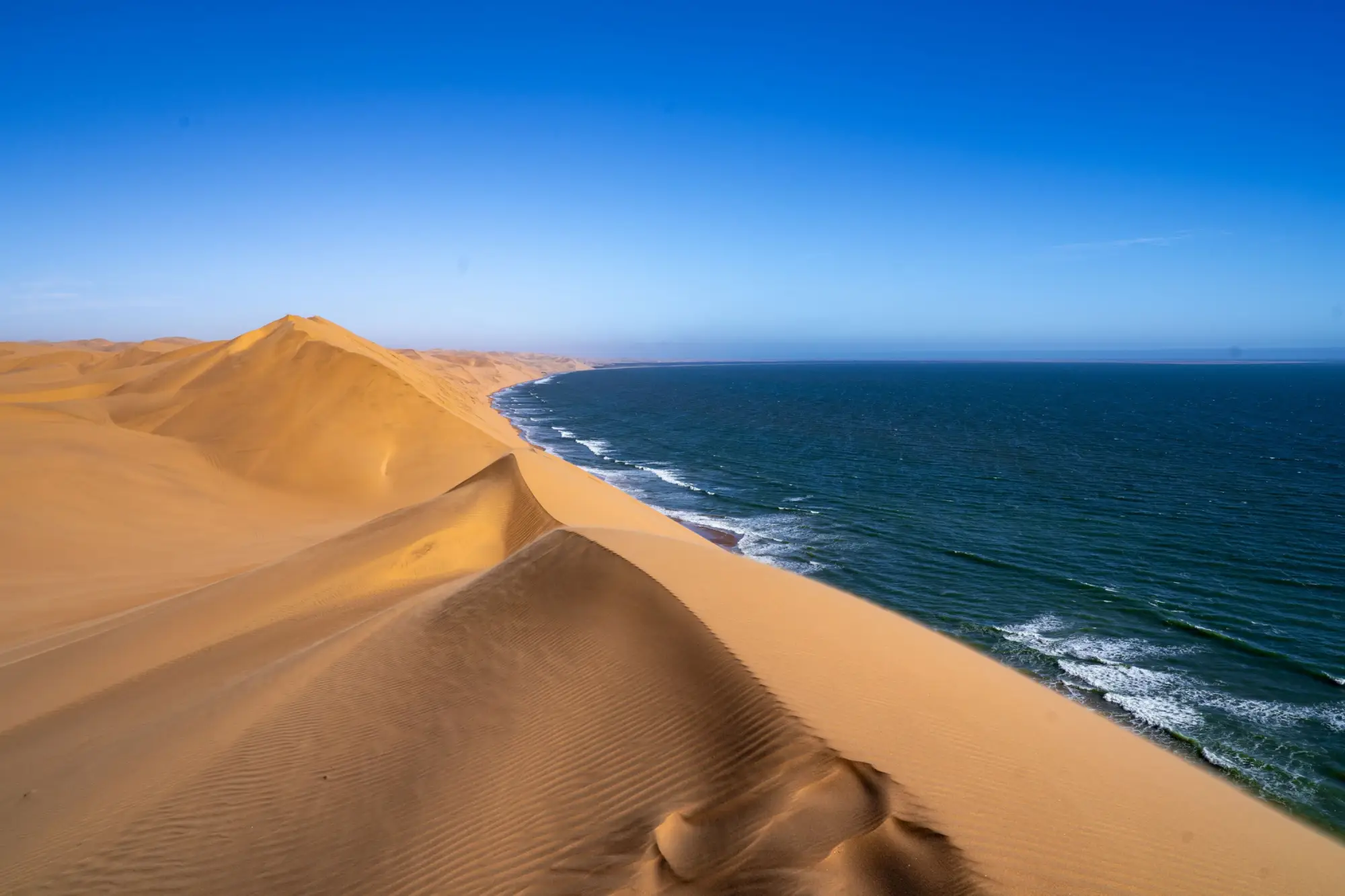
The Namib Desert, considered the oldest desert in the world, stretches along the Atlantic coast and is home to some of the highest sand dunes on Earth, including the famous Dune 45 and Big Daddy in Sossusvlei.
The Skeleton Coast is known for its mysterious and rugged landscape, characterized by foggy and windy conditions, shipwrecks, and colonies of seals. It is a place where the desert meets the ocean, creating a unique and unforgettable experience
Mountains and Canyons
Fish River Canyon: Fish River Canyon, the second-largest canyon in the world, offers visitors dramatic views and hiking trails that wind through its steep walls and along the river.
Naukluft Mountains: The Naukluft Mountains, part of Namib-Naukluft National Park, are known for their steep cliffs, deep gorges, and unique flora and fauna.
Savannas and National Parks
Etosha National Park is one of the best places in the world for wildlife viewing. Etosha features a vast salt pan surrounded by savanna, where visitors can spot lions, elephants, rhinos, zebras, and many other species.
The Caprivi Strip is a narrow stretch of land in northeastern Namibia that is greener and more humid than the rest of the country, featuring rivers, wetlands, and abundant wildlife.
Rivers and Oases
The Kunene River forms part of Namibia's northern border with Angola and is home to the spectacular Epupa Falls, where the river cascades over a series of waterfalls surrounded by palm groves.
The Swakop River and Kuiseb River flow through the Namib Desert, creating narrow green oases within an otherwise arid landscape.
Rock Formations
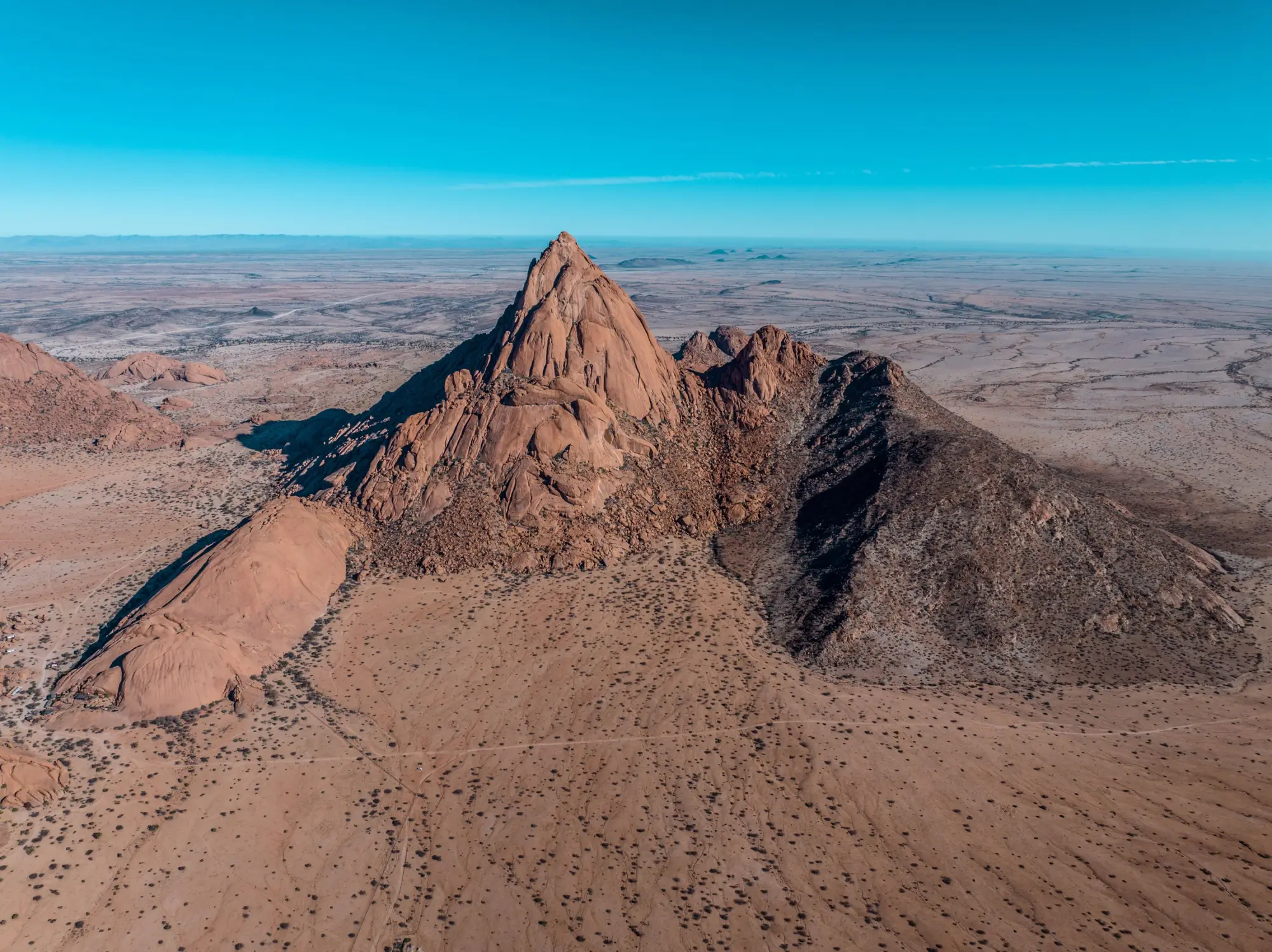
Spitzkoppe, a granite mountain often referred to as the “Matterhorn of Namibia,” is a popular destination for climbers and photographers thanks to its dramatic shape and colorful sunsets.
Our Trip To Namibia
Length of Stay:
30 days – August 2023 (children aged 8 and 7)
Accommodation:
Gondwana Collection Namibia hotel and campsite network (almost every location had a resident cat).
Restaurants:
We dined mainly at the hotels operated by Gondwana Collection Namibia, where the food was always excellent. We also had the opportunity to try several exotic types of meat that were new to us. Otherwise, we ate at roadside restaurants while traveling from one destination to another, and we enjoyed good meals everywhere we stopped. In Lüderitz, we found the outstanding The Portuguese Fisherman Restaurant, where we enjoyed delicious lobster at a very reasonable price. In Walvis Bay, the excellent Godenfang Restaurant served some truly memorable meals. A little farther away in Swakopmund, Andy's Restaurant offers what may well be the best mussel soup we have ever tasted. In Windhoek, be sure to visit Joe's Beerhouse, where the menu even includes zebra.
Namibia, Botswana and Zimbabwe
We entrusted our journey to Namibia, as well as our visits to other African destinations, to a specialist travel agency. It gave us peace of mind knowing that everything would run smoothly, which is invaluable in a country where you are unfamiliar with local conditions. They designed the itinerary exactly according to our wishes, even including stops in Botswana's Chobe National Park and at Victoria Falls in Zimbabwe.
However, our first surprise came immediately after landing in Windhoek. At immigration, we were asked to present our children's birth certificates, even though we were travelling as a family sharing the same surname. Fortunately, we had copies stored on our phones and, after a short delay, were allowed to continue. Next came collecting the car and receiving instructions on how to change a tyre—apparently a common experience in Namibia.
We set off on our road trip, and the first challenge was driving on the left-hand side of the road. Combined with city intersections, it led to a few confusing moments, but after a day behind the wheel, it already felt almost natural. We spent two days exploring Windhoek, strolling through the city, visiting the church, and even venturing into the Katutura township. There, we sampled unusual local delicacies, including grilled beef sprinkled with spiced salt and roasted worms. In restaurants, we discovered more local specialties such as tripe stew and fried fat cakes, which tasted like unsweetened doughnuts.
From the capital, we headed toward the Atlantic coast and the town of Lüderitz. The roads were almost empty, and at times it felt as though we had landed on Mars. The asphalt soon gave way to gravel roads, forcing us to deflate the tyres. We stopped at the abandoned Garub railway station and watched as the sand slowly consumed entire buildings. Upon arriving in Lüderitz, we discovered that the trunk of our car was full of fine desert sand. Only then did we understand why the rental staff had spent so much time explaining how to use the ventilation system. Lüderitz welcomed us with cold, damp weather, and temperatures barely reached ten degrees Celsius.
Our boat trip to see penguins had to be postponed, so early the next morning we visited the abandoned diamond-mining town of Kolmanskop. Sunrise is the best time to be there, when shafts of light stream through the windows of houses already half-buried by dunes. It was hard to know where to point the camera first—every room seemed to possess its own unique and incredibly photogenic charm. Later that afternoon, we finally made it out on the water, although the penguins could only be seen in the distance on a small offshore island. We ended the day with a walk along the beach.
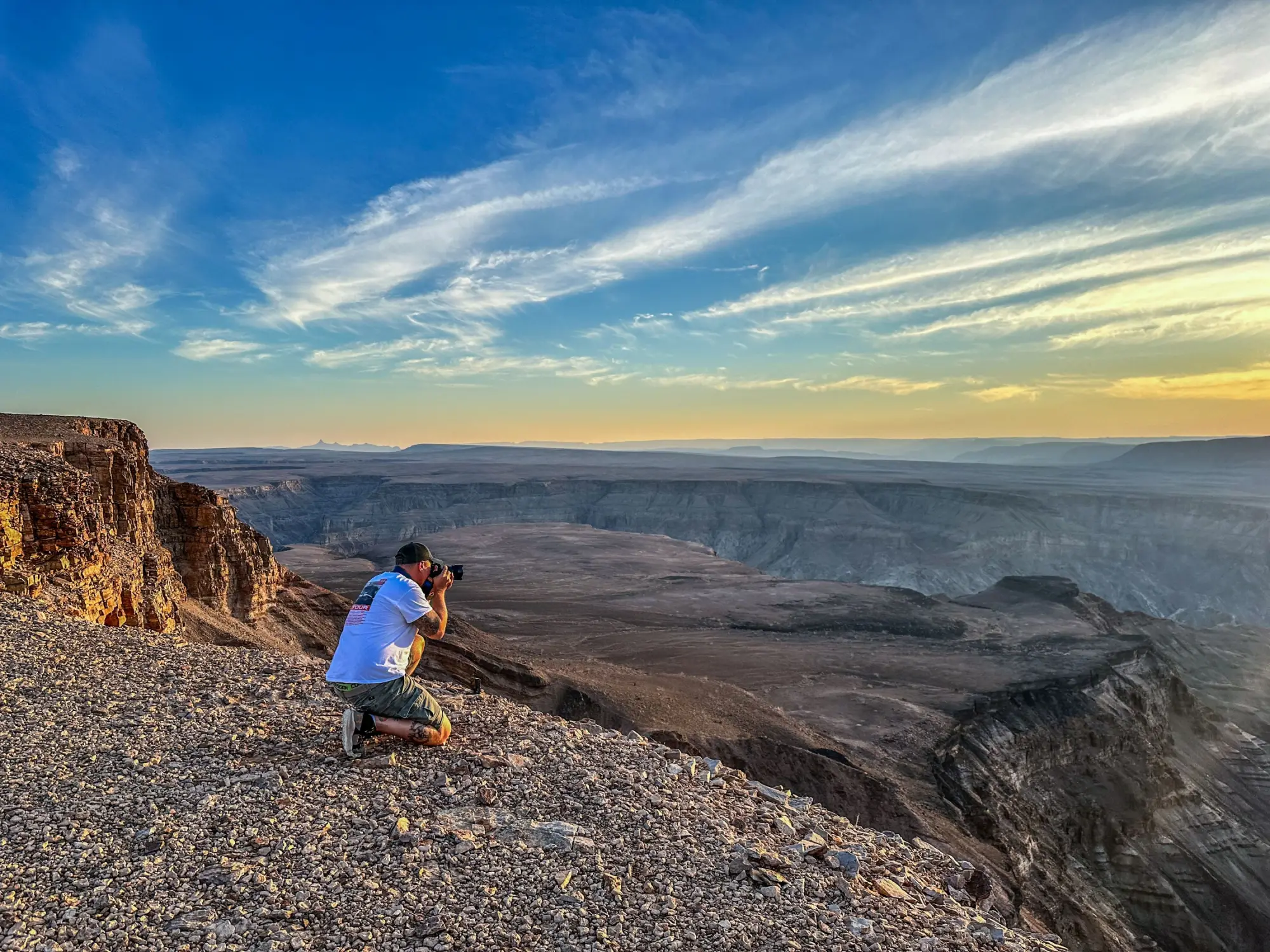
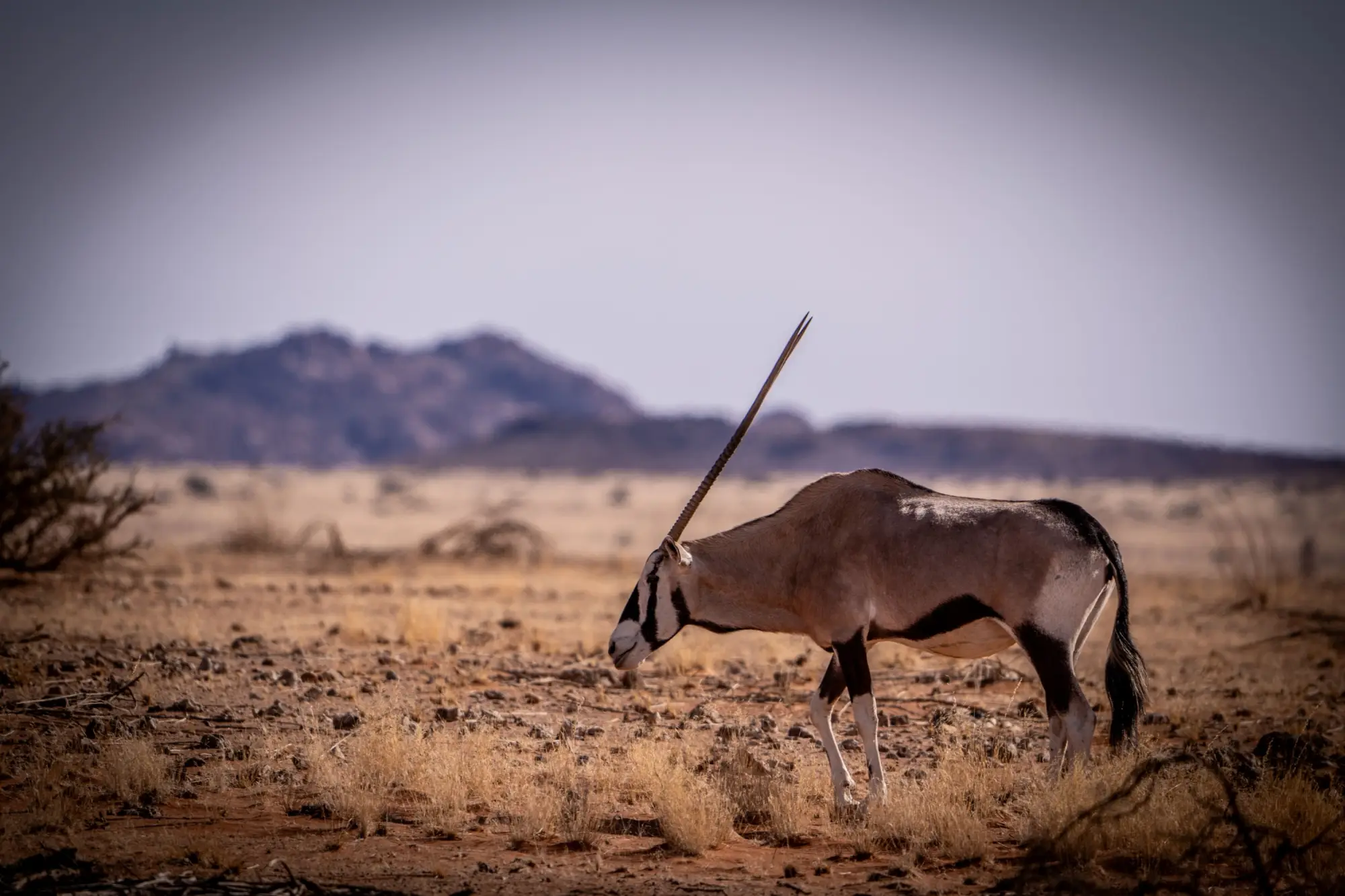
The next stage of our journey took us to Fish River Canyon. We arrived just in time to watch the sunset over the second-largest canyon in the world. The viewpoints are largely unprotected, creating an almost dizzying sensation as you look down into the vast abyss. From there, we continued into the Kalahari Desert near the borders of South Africa and Botswana. Along the way, we visited the Quiver Tree Forest, where these now-rare trees grow among giant boulders. Rock hyraxes, small animals resembling oversized guinea pigs, seemed to be everywhere. In the Kalahari, we joined a safari in an open jeep and saw gemsbok, springbok, giraffes, and zebras. At sunset, we sat on the warm sand, snacking on dried oryx and springbok sausages.
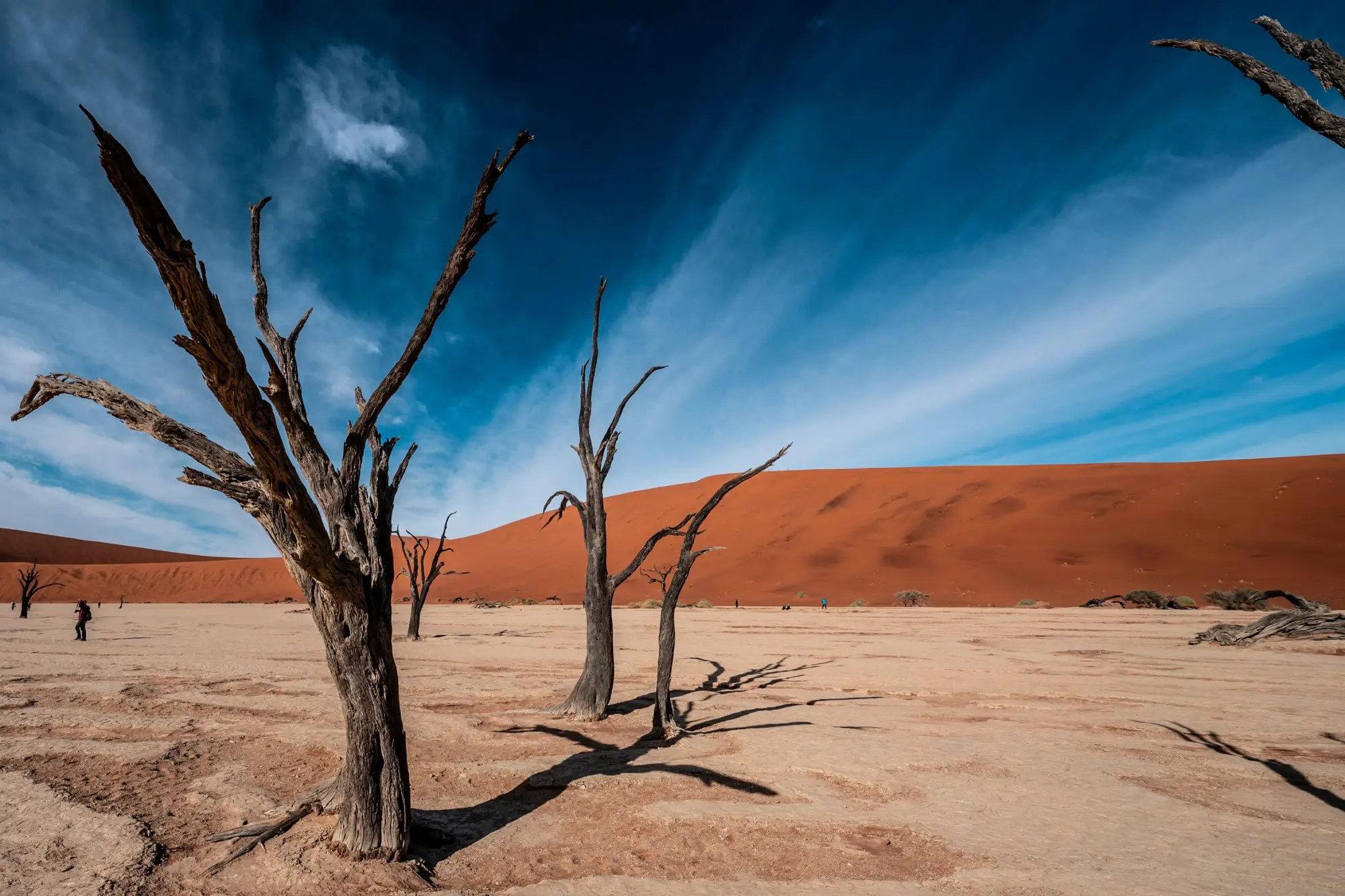
Our next stop was the Namib Desert, specifically Sossusvlei with its majestic dunes. Each dune has a number, and on that day Dune 40 felt as though it belonged entirely to us. We climbed to the top, but strong winds and stinging sand soon drove us back down. The famous clay pan with its dead trees was already crowded with visitors, yet it still felt like another world. The pleasant morning chill gave way within two hours to temperatures almost twenty degrees higher. After visiting Sesriem Canyon, we returned to our lodge before continuing the next day toward Swakopmund and Walvis Bay.
Walvis Bay turned out to be the most welcoming town of the entire trip. At a beach inhabited by seals, we got stuck for the first time. Our tyres had not been deflated enough, and the car sank into the sand up to its axles. We had already called the rental company when a local guide drove past in a huge vehicle. He stopped, pulled us out, lowered the tyre pressure properly, and wished us a pleasant holiday. Thanks to him, we were able to continue and drive directly past hundreds of seals. The moment we stepped out of the car, the entire colony disappeared into the sea amid a chorus of unhappy barking. It was fascinating. Along the way, we also spotted jackals and a flock of flamingos.
The following day brought a cruise around the bay. Seals and pelicans jumped directly onto the boat, completely accustomed to being fed by tourists. After returning, we transferred into jeeps and headed into the dunes, where the ride felt like a roller coaster. Then came quad bikes and sandboarding. The children were thrilled, while we were left with memories of steep descents and pockets filled with sand. Sandboarding on our stomachs was particularly fun, although climbing back to the top certainly was not.
Continuing north, we stopped at Cape Cross Seal Reserve. The colony, numbering tens of thousands of seals, was astonishing, although the smell was almost unbearable. Damaraland welcomed us with red landscapes and the enormous granite peak of Spitzkoppe. We visited fossilized trees, 6,000-year-old rock paintings at Twyfelfontein, and a village belonging to the Khoisan people. The nearby Himba communities were equally fascinating, known for covering their bodies with a mixture of red ochre and animal fat.
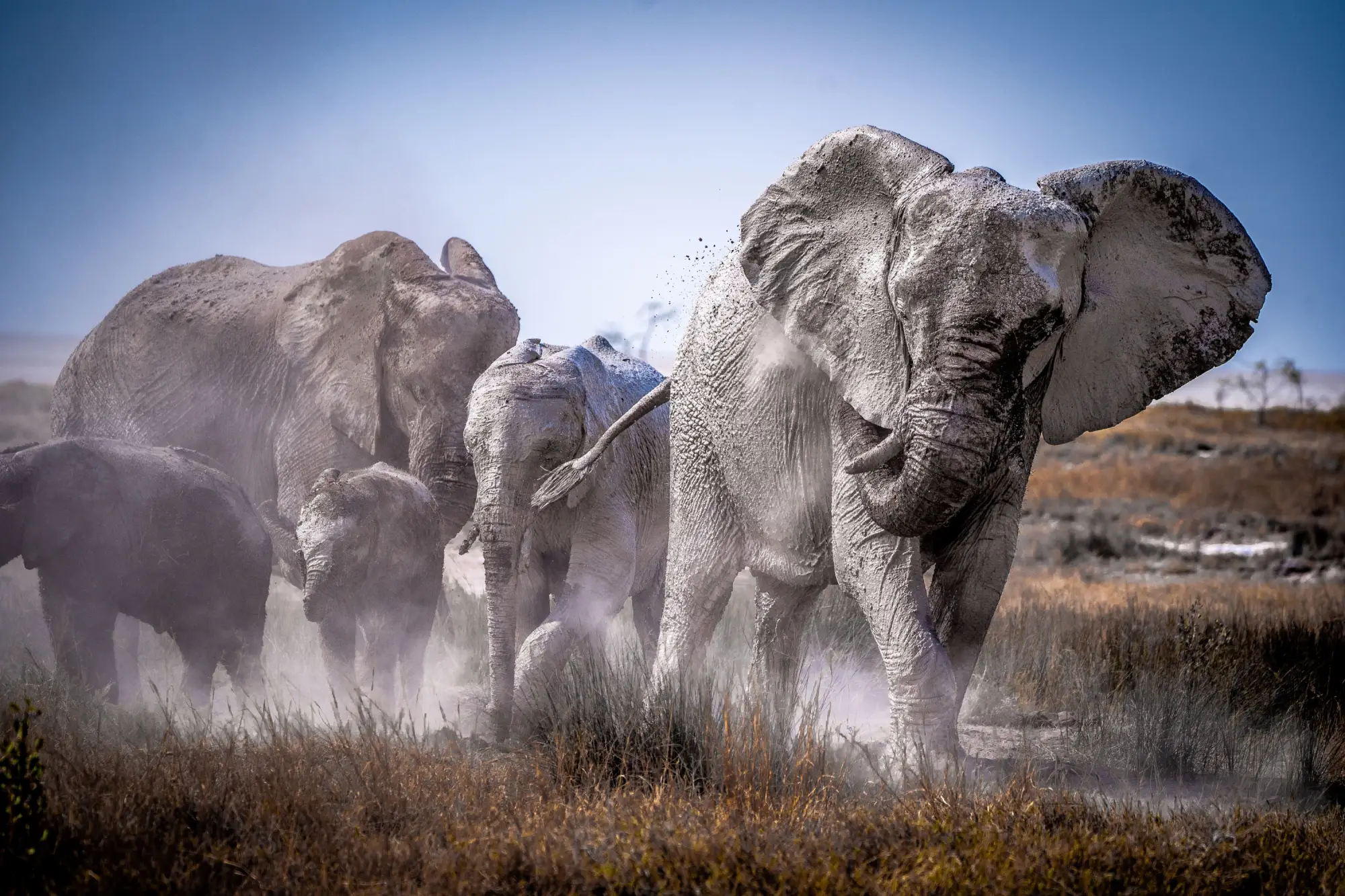
Next came Etosha National Park. For two days, we drove around on our own and saw relatively few animals, while one of us always had to concentrate on driving. It was only on the third day, with a guide, that the park truly came alive. We saw lions, herds of giraffes, and, most memorably, a black rhinoceros that suddenly emerged from the bush. It was agitated, chased every animal away from the waterhole, and disappeared again without taking a drink. Watching wildlife from a wooden hide overlooking a waterhole became one of the highlights of the trip, especially when an elephant family and several towering giraffes appeared.
In northern Namibia, we travelled all the way to the borders with Angola and Botswana. Our riverside lodge, accessible only by boat, felt almost entirely ours. The boys went fishing and caught tiger fish. An afternoon cruise along the Zambezi River revealed crocodiles, hippos, and hundreds of birds. Our final Namibian accommodation was located near the border with Chobe National Park. We stayed in tents, where a local cat managed to find its way inside and eventually spent the night sleeping in our bed. Camping has a special charm—you hear every sound made by the animals around you. The nights are cold, while the days are unbearably hot.
From there, we crossed into Botswana. We stayed near Chobe National Park, and the following days were devoted entirely to safari drives. Mornings began at five o'clock, followed by breakfast and afternoon game drives. Our guide was excellent. He spoke little, but always managed to find exactly what we hoped to see. Herds of elephants along the river, a pride of lions, a pair of leopards, countless antelopes, and buffalo. Three days passed in what felt like an instant.
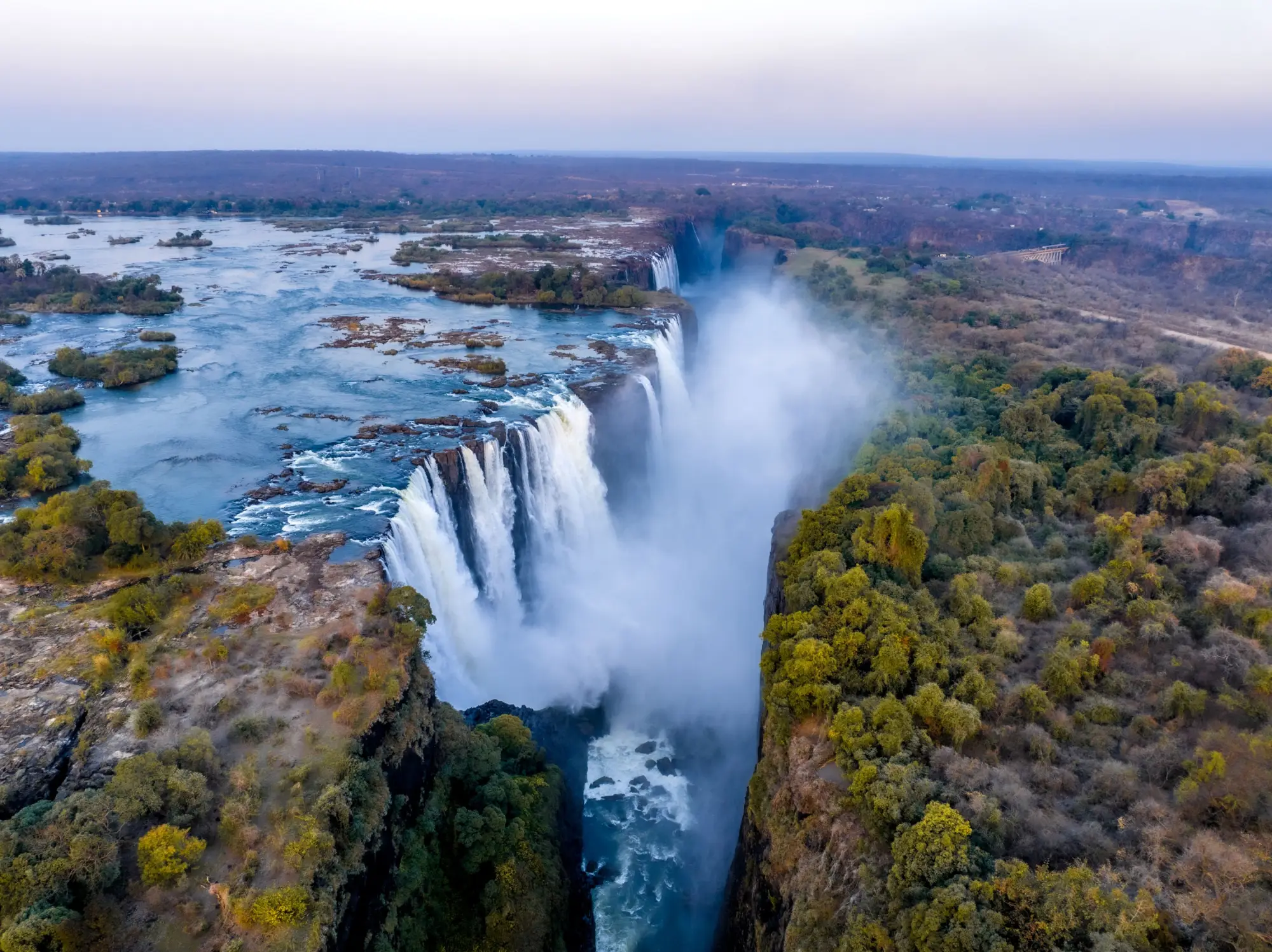
The final chapter of our journey took us to Zimbabwe. We checked into the most beautiful hotel of the entire holiday and hurried that very afternoon to Victoria Falls. The entrance fee of fifty dollars per person granted access to paved paths and viewpoints overlooking the falls, which remained spectacular even during the dry season. Water plunged into a gorge more than one hundred metres deep, while mist shimmered with rainbows. The view from the Zimbabwean side is simply the best. It is also possible to walk across the bridge into Zambia, although it requires patience, as the persistent street vendors can be quite overwhelming.
While in town, we came across an opportunity to walk with cheetahs. Although we suspected it was not a genuine rescue centre, the children convinced us to go. We slowly walked through the landscape alongside two cheetahs on leads, stroking them whenever they lay down. In the end, it became an unforgettable experience. The same was true of an evening sunset cruise on the Zambezi River. We had expected it to be rather dull, but it turned out to be one of the most enjoyable excursions of the entire trip.
And so our month-long African adventure came to an end. It was a journey full of contrasts, adventures, and moments that left a lasting mark on us. Even though we returned home exhausted, we already knew that one day we would want to come back.
Our Tips
What to Visit: Windhoek, the capital city with around 400,000 inhabitants, appears clean and surprisingly uncrowded. Upon arrival, it can take some time to get used to driving on the left-hand side of the road, especially at intersections, but after a few days it becomes quite natural. The city is also home to a beautiful church.
The coastal town of Lüderitz and the nearby abandoned diamond-mining town of Kolmanskop, partially buried by sand, are incredibly photogenic and well worth a visit. The best time to go is early in the morning, before the crowds arrive and when the sunlight shines beautifully through the windows of the abandoned houses.
Fish River Canyon is the second-largest canyon in the world after the Grand Canyon, and the sunsets here are truly magical.
The Kalahari Desert is the oldest desert in the world. Its striking red landscapes are beautiful, and along the way you can visit the remarkable Quiver Tree Forest, home to unusual trees and rock hyraxes that resemble oversized guinea pigs.
The Namib Desert and Sossusvlei are famous for their breathtaking dunes and outstanding photographic opportunities. Deadvlei in particular attracts large numbers of visitors and is one of the most iconic locations in the country.
The towns of Swakopmund and Walvis Bay are charming seaside communities on the Atlantic coast. Temperatures here are noticeably cooler than inland. The area is best known for whale and seal watching, as well as guided off-road driving across the dunes. At times the ride feels like a roller coaster. Sandboarding is also very popular, allowing visitors to slide down dunes on specially designed boards, often lying on their stomachs.
Cape Cross is home to a massive seal colony. Be prepared for an extremely strong and pungent smell, and make sure to check opening hours in advance.
The Damaraland region features stunning red landscapes and is home to the Himba and Khoisan peoples. The Khoisan language is famous for its distinctive clicking sounds. The area also contains fossilized trees, 6,000-year-old rock paintings, and remains hot even during the coolest time of year.
The Etosha Salt Pan forms the heart of a national park rich in wildlife. It is a very arid region with several waterholes where animals gather to drink. Opening hours are based on sunrise and sunset, so it is important to check them in advance. It is possible to explore the park independently, but that requires a fair amount of luck. Hiring a vehicle with a guide is the best option, as guides receive information from one another about notable wildlife sightings, allowing you to see much more.
The Kavango Region is best known for birdwatching along its rivers. After so many exciting experiences elsewhere, it may seem less dramatic at first, but it offers a wonderful opportunity to relax and enjoy beautiful scenery. In Namibia, everything is beautiful in its own way, and the country is well worth taking the time to explore thoroughly from end to end.
Restrictions for Children: There were no restrictions for children in terms of activities. The only exception was quad biking, which should really have been refused at reception, as children aged seven or eight are simply too young to operate such a heavy machine on their own. During our ride across the sand dunes, we often found ourselves hoping we would make it back safely. From a health perspective, Namibia is a relatively safe and developed country, but basic vaccinations and good hygiene practices should not be neglected, especially when travelling with children. Mosquitoes are almost nonexistent during the cooler month of August, and the risk of malaria is much lower than in many other parts of Africa. Most importantly, there are no tsetse flies here, which is a very welcome change compared to equatorial countries. One final and important piece of advice: always carry copies of your children's birth certificates. Immigration officials are likely to ask for them upon arrival, and without them you may not be allowed to enter the country. To be safe, it is worth carrying them whenever travelling to any African country—you never know when they might be required.
Food Tips: Try dishes made from springbok, kudu, zebra, ostrich, or crocodile meat. You are unlikely to have the opportunity to taste these at home, while here they are completely normal—and all of them taste good. Roasted mealworms are also popular. Of our family, only the male members were brave enough to try them, and according to them, they tasted quite good. At markets and in restaurants, you will often find strips of grilled beef served with a special seasoned salt, which is sprinkled on the meat only after it has been cooked. We were also told that the tripe stew was very good. As a side dish, you will often come across fat cakes, which are essentially deep-fried balls of dough that resemble doughnuts. And in the coastal regions, be sure not to miss the fish and seafood. They are fresh, and the locals know how to prepare them exceptionally well.
What Not to Do: Do not drive at night; it is much safer to travel during daylight hours. Whenever you park somewhere, someone will usually watch your car for you—do not forget to pay them for this service. In parks where wild animals live, do not leave your vehicle except in designated areas. Do not fly drones without permission from the authorities. Do not drive on unpaved roads, or especially on sandy beaches, with fully inflated tyres. At beaches near seal colonies, watch where you step. Their droppings can leave a smell on your shoes that remains even after multiple attempts to clean the soles with various products. Also be careful around baboons. They are aggressive and, above all, extremely bold animals. Do not rent anything other than a 4x4 off-road vehicle, otherwise you may seriously regret it during your trip. One final thing: Czech citizens need a visa to enter Namibia (as of 2023). Upon arrival, they are automatically issued a single-entry visa if they have not arranged one in advance. However, if you leave Namibia by car during your stay—for example, on a trip to Botswana—you may not be allowed back into the country, as visas are issued only at the airport in Windhoek. If there is any chance this could happen during your trip, apply for a multiple-entry visa from the outset.
Namibia is a fascinating destination where the spirit of modern Africa blends with a rich German heritage. This unique combination offers visitors unforgettable experiences, whether exploring historic towns, enjoying local cuisine, or admiring the country's stunning natural beauty. Namibia is an ideal choice for those seeking an authentic African experience with a touch of European history.
More photos can be found at Gallery - Namibia