Nepal – A land beneath the Roof of the World
Nepal is a country where the sky touches the mountains and every step carries the scent of adventure. Among the snow-capped peaks of the Himalayas, colorful prayer flags, ancient temples and the bustling streets of Kathmandu lies a world full of contrasts, humility and unforgettable experiences. Although Nepal is one of the poorest countries in the world, its true wealth lies in the warmth of its people, its spiritual atmosphere and a landscape that takes your breath away. It is a place where travelers can easily lose themselves in the mountains, but often find themselves.
Interesting Facts About Nepal
Where Time Flows Differently
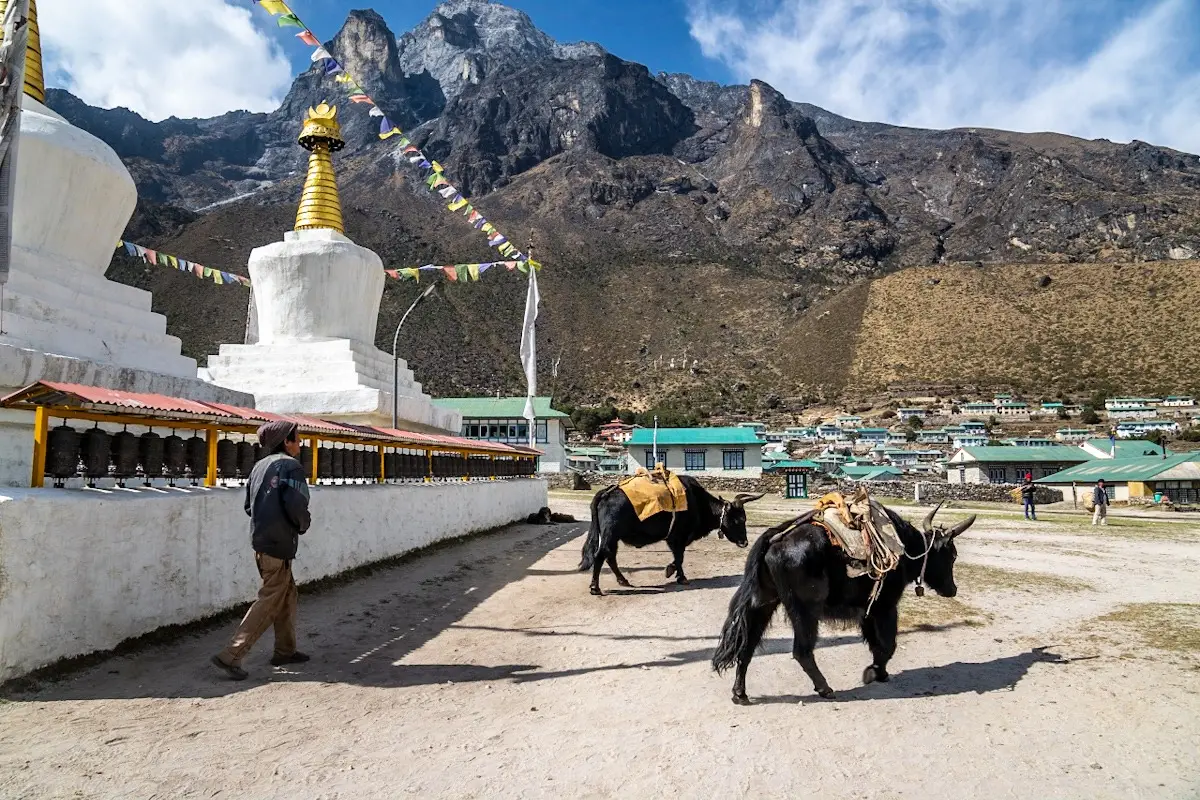
Nepal is a country where faith is not hidden only behind temple walls, but is part of everyday life. In the streets of Kathmandu, the scent of incense mixes with the sound of prayer wheels, colorful offerings and prayer flags fluttering in the wind. Hindu temples stand here beside Buddhist stupas, and one often has the feeling that the boundaries between religions fade far more naturally than elsewhere. The most widespread religion is Hinduism, followed by the majority of the population, but Buddhism, Islam, the Kirat religion, Christianity and other smaller faiths also play an important role. It is precisely this diversity that makes Nepal a country of countless festivals, rituals and traditions. At the same time, faith here is also connected with rules that may surprise travelers – for example, only Hindus are allowed to enter Hindu temples, while other visitors may admire them only from the outside. Another unusual aspect is that there is not just one “New Year” here. In addition to our calendar, Nepal also uses, for example, the Bikram Sambat calendar, according to which the country is approximately 56 years and 8 months ahead. While we are in the year 2026, in Nepal this calendar marks the year 2083. Alongside it, there is also Nepal Sambat, the traditional calendar of the Newar community, and in the Buddhist mountain regions Losar is celebrated – the Tibetan and Himalayan New Year. Different communities therefore welcome the new year at different times, depending on their faith, traditions or ethnic origin. For travelers, it is fascinating to see that time here is not just a number in a calendar, but part of culture and identity. Although Nepal is one of the poorest countries in the world, its spiritual richness, respect for traditions and ability to celebrate life in many forms are among the things that leave the deepest impression.
A World of Mountains and Sherpas
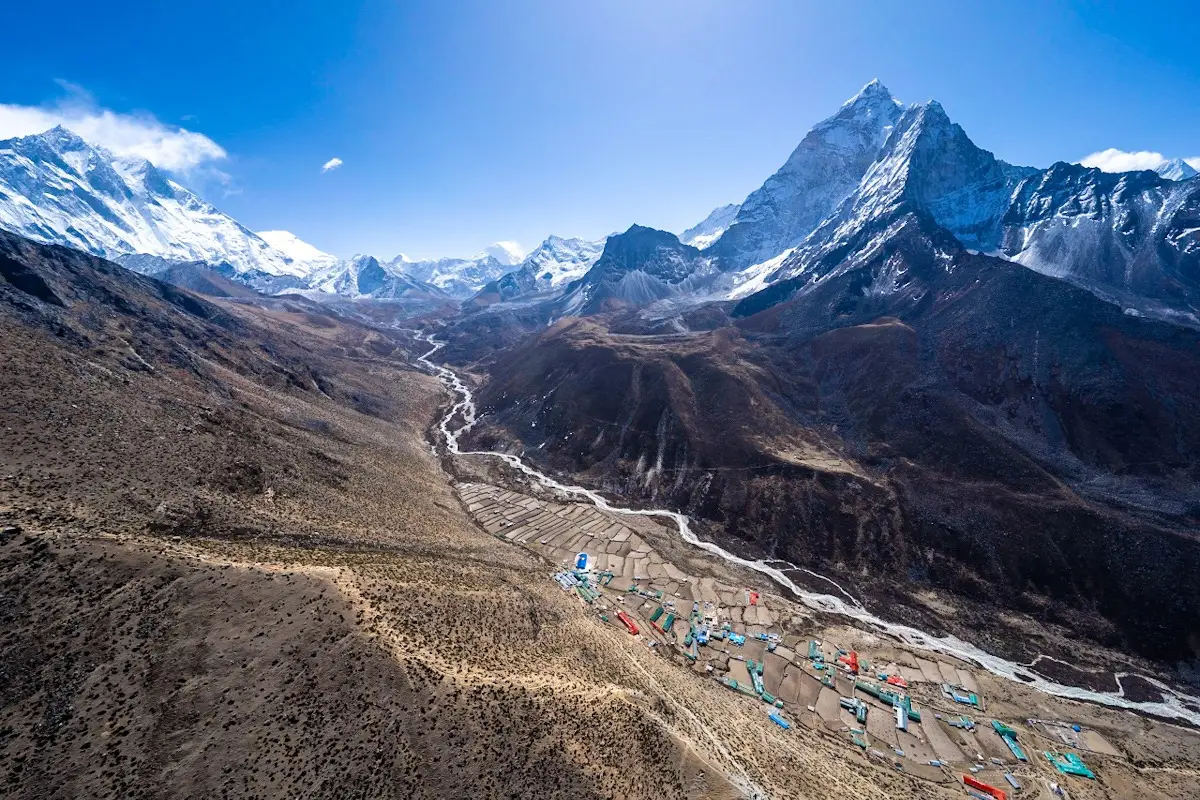
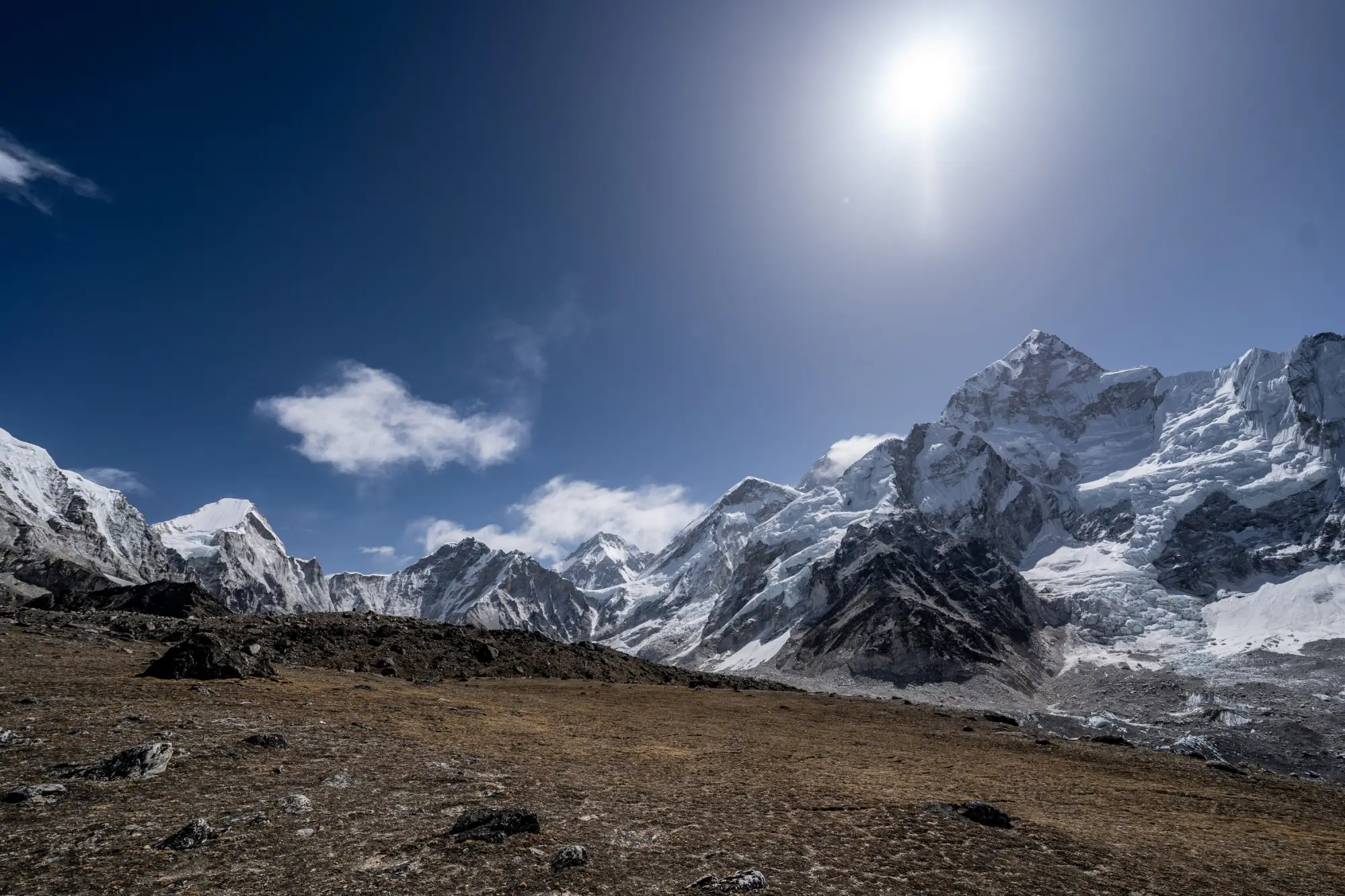
Nepal is inseparably linked with the Himalayas – a mountain range that feels almost otherworldly. It is here that the world’s highest mountain, Mount Everest, which the Nepalese call Sagarmatha, rises, along with other famous eight-thousanders that attract climbers, adventurers and ordinary travelers from all over the world. Snow-capped peaks, deep valleys, suspension bridges, stone paths and small mountain villages create a landscape that is rugged, beautiful and humbling all at once.
Closely connected with the Himalayas are the Sherpas, people who have lived high in the mountains for generations and have adapted perfectly to the demanding conditions. We often associate them mainly with ascents of Everest and with their role as mountain guides, porters or rescuers. In reality, however, the Sherpas are a distinct ethnic group with their own culture, language, traditions and a strong connection to Buddhism. For them, the mountains are not just a tourist attraction, but a home and a sacred space.
Their life is admirably hard. High altitude, cold, limited transport options, modest conditions and dependence on seasonal tourism shape the everyday reality of many mountain regions. Despite this, the Sherpas are known for their hospitality, calmness and incredible physical endurance. For many expeditions to Sagarmatha and other Himalayan peaks, they are absolutely indispensable – without their experience, knowledge of the terrain and work under extreme conditions, many ascents would not be possible at all.
The Himalayas, however, are not only a symbol of adventure and great achievements. They are also a place where one fully realizes how small humans are in comparison with nature. Every step in the thin mountain air, every view of the white peaks and every encounter with the people who live here is a reminder that Nepal’s true wealth lies not only on the mountain summits, but also in the people who have lived beneath them for centuries.
Kathmandu
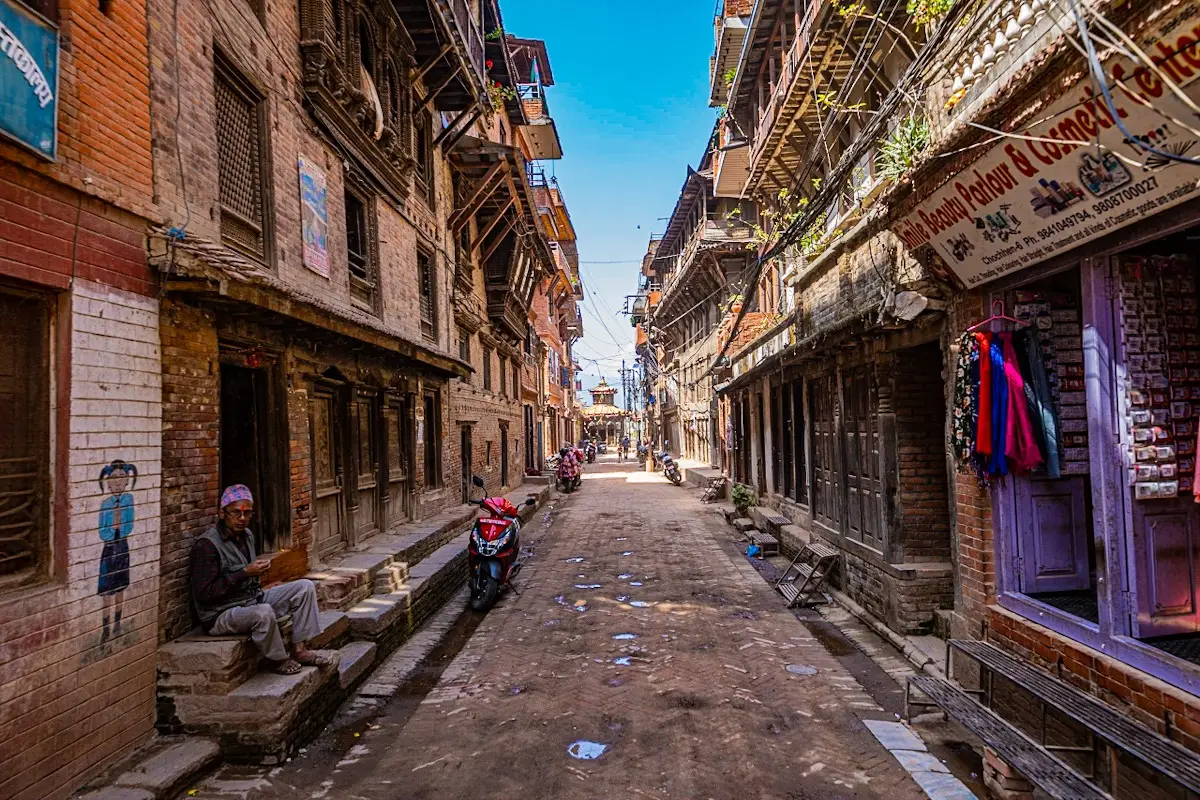
Kathmandu is a city that absorbs you the moment you arrive. It is loud, dusty, chaotic, colorful and full of life, but at the same time raw and, in places, very demanding for a European visitor. In its narrow streets, the honking of motorbikes mixes with the smell of spices, incense and street food, as well as the bustle of shops and markets. Rubbish often lies scattered in the streets, stray dogs run around, and you may also come across scenes that are not easy for everyone to witness – such as ritual animal sacrifices, which are part of certain religious traditions.
On every corner, there are temples, small shrines, prayer wheels or statues of gods, reminding you that spiritual life here is part of everyday existence. At first glance, Kathmandu may seem confusing, dirty and wild, but that is exactly where its special power lies. It is not a polished city created for tourists, but a place full of real life, contrasts, faith and everyday bustle. It is authentic, intense and unmistakable.
Nepal’s Animal Inhabitants
Nepal is not only a land of mountains, temples and prayer flags, but also home to a surprisingly diverse fauna. Because its landscape changes over a relatively short distance from tropical lowlands to the icy peaks of the Himalayas, animals live here that one would often hardly associate with a single country. In the south of Nepal lie the warm Terai lowlands with national parks and jungle, while in the north the rugged world of the high mountains begins.
In the lowland regions, for example in Chitwan or Bardia National Park, one can encounter some of Nepal’s best-known animals – Bengal tigers, Indian rhinoceroses, crocodiles, wild elephants, deer, monkeys and numerous bird species. Wild peacocks are also commonly seen in southern Nepal, moving freely through the landscape and adding a special charm to the local nature with their striking colors.
It is here that one discovers a completely different face of Nepal from the Himalayan one. Instead of snow and glaciers, a green, humid and lively landscape full of jungle sounds opens up. At higher altitudes, the fauna gradually changes. In the mountain forests live, for example, red pandas, Himalayan tahrs, langurs, various species of pheasants and birds of prey, as well as bears.
One of Nepal’s rarest and most mysterious inhabitants is the snow leopard. This shy predator lives high in the mountains, and seeing it in the wild is exceptionally rare. That is why it is often called the ghost of the mountains.
Animals in Nepal are part of nature, religion and everyday life. In the streets of the cities, one encounters stray dogs, monkeys near temples or cows, which hold a sacred status in Hindu culture. In the south of the country, elephants can also be seen being used for work or in tourism. For Europeans, the sight of an elephant chained by one leg to a post can be a very powerful and unpleasant experience, as it also shows the harsher side of the relationship between humans and animals.
An interesting but increasingly sensitive topic is tigers. Their protection is one of Nepal’s great conservation successes, as their numbers have increased significantly in recent years. On such a small territory, however, this also brings new problems. Tigers are more frequently coming close to villages, fields and people, so situations in which wild nature comes into conflict with the everyday life of local residents are becoming more common.
Our Trip To Nepal
Length of stay:2 weeks – April 2022 (children aged 6 and 7)
Accommodation:
Baber Mahal Vilas
Hotel Everest View
Club Himalaya
Namobuddha Resort
Jungle Villa Resort
Temple Tree Resort
Gokarna Forest Resort
Restaurants:
Most of the time, we ate at the hotel where we were staying, occasionally also outside on the street or in restaurants our guide took us to, as he was available to us almost every step of the way. It has to be said, though, that after seeing how meat is sold on street counters – in dust, dirt, without refrigeration and among all the wild animals roaming around – you almost feel like becoming a vegetarian. In moments like that, it is great to have something like paneer cheese instead of meat. Otherwise, almost everything there is genuinely spicy: spaghetti for the children, breakfast, sauces – simply everything. After fourteen days, European digestion starts to have had enough and begins to protest a little. Still, it is definitely worth trying one of the versions of butter chicken, chicken tikka masala or another similar Indian specialty.
Our April trip to Nepal was varied from the very beginning. In just under two weeks, we traveled through Kathmandu and its surroundings, climbed up towards the Himalayas, experienced views of Everest and Annapurna, visited historic towns as well as Buddhist and Hindu pilgrimage sites, made it all the way to the subtropical jungle in Chitwan, and finally enjoyed a peaceful ending at Gokarna Forest Resort near Kathmandu. Even the travel agency’s itinerary alone gave us a sense of just how incredibly diverse Nepal is.
The whole adventure began in Kathmandu, the capital city located in a valley at an altitude of around 1,300 meters above sea level. After arriving, we headed into the city and immediately came across a New Year celebration. Slowly, we began to tune in to the Nepali atmosphere – a mixture of chaos, colors, dust, the scent of incense and constant movement. Although the children had slept only four hours on the plane, they were surprisingly lively, so we managed the first day much better than we had expected.
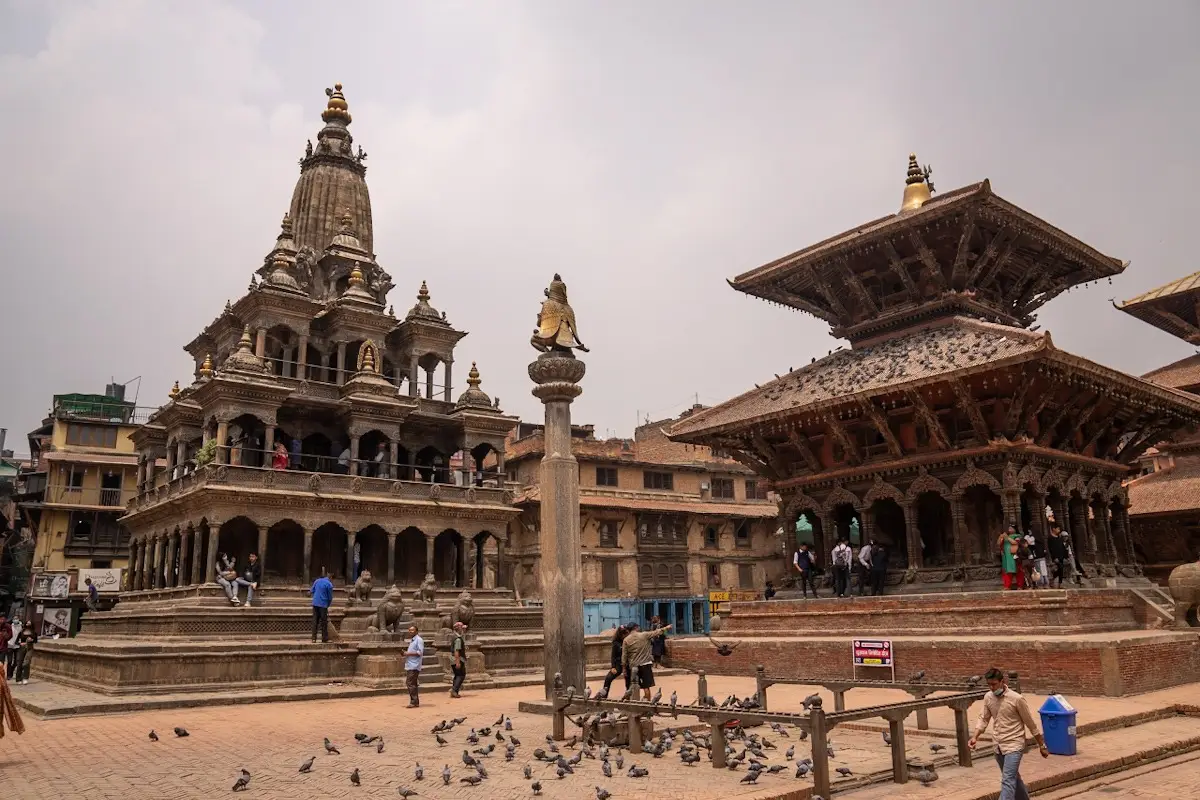
Kathmandu felt to us like a city of contrasts. Narrow streets, noise, traffic, temples, markets and ancient buildings all blend together here into something that is sometimes chaotic, but at the same time fascinating. Among the city’s most important places are Durbar Square, the Boudhanath Stupa, Swayambhunath – the famous Monkey Temple – and the Pashupatinath temple complex. And that was exactly what Nepal felt like from the very first hours: alive, loud, spiritual and completely different.
At first, we had the slight feeling that various illnesses and infections were lurking around every corner. We constantly wanted to wash our hands and disinfect everything. But that was mainly the first culture shock. After a few days, this “panic” faded away on its own, and you begin to immerse yourself more naturally in the local rhythm.
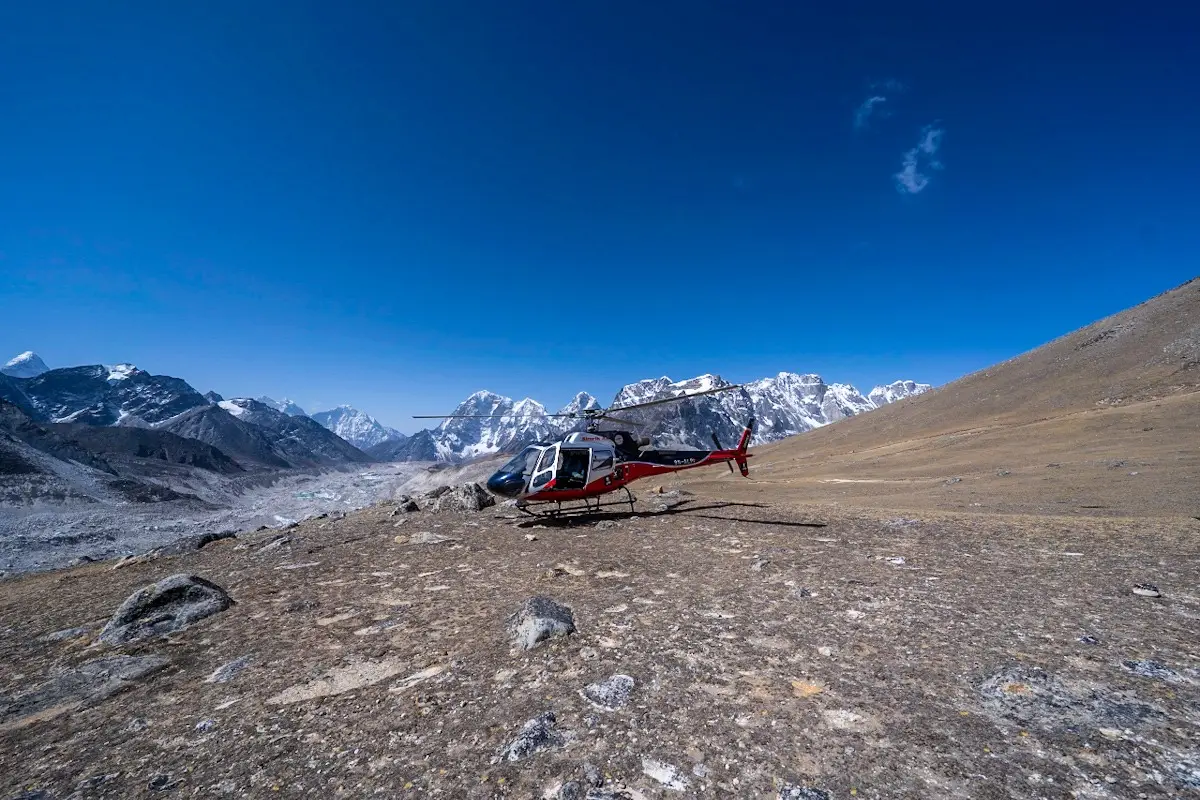
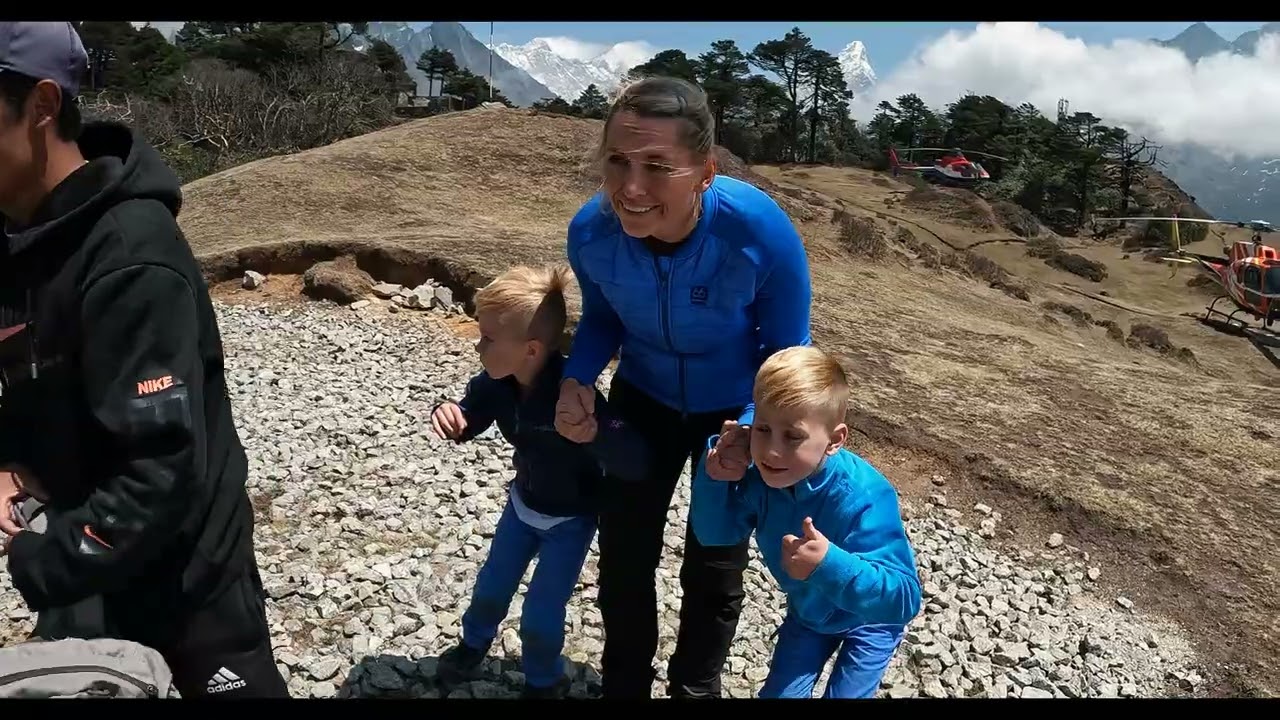
The very next morning, we were supposed to fly by helicopter towards Everest, but the flight was canceled. So instead of a mountain adventure, we explored the city and its temples, and ended the evening somewhat unexpectedly at the Hard Rock Café. A day later, however, we really did set off – and in true Nepal style. First, the helicopter was changed, then the original one was repaired, so in the end we got the original one again. Honestly, it does not exactly make you feel more confident when you are about to fly into mountainous terrain and up to an altitude of over 5,000 meters, where the air is thin. Because of this, we also had to take only the bare minimum with us so that the helicopter would be as light as possible.
Via a stopover in Lukla, which is often described as one of the most dangerous airports in the world – luckily, we did not land in Lukla by plane, but by the already mentioned helicopter, phew – we reached the Syangboche area and from there continued to one of the absolute highlights of the entire trip: a short landing near Kala Patthar at an altitude of around 5,600 meters. It is right there that you immediately understand that the Himalayas are not only beautiful, but also harsh. The children did not feel entirely well, their stomachs hurt, and there was noticeably less air. Still, it was an experience one never forgets. Looking towards base camp, you are overcome by the feeling that you might cry. Not from exhaustion, but from that strange emotion of suddenly standing face to face with something you have known your whole life only from pictures.
We spent the night at Hotel Everest View at an altitude of 3,880 meters, which is known as one of the highest-altitude hotels in the world. All the staff were incredibly kind and helpful – after all, we were in the Sherpa region. In the afternoon, Everest disappeared behind clouds, fog rolled in and it became cold, but the power of that place was still immense. We walked only a few kilometers to the nearest village, but the effort at this altitude was enormous. The children rested almost every hundred meters – and honestly, we adults were struggling too.
In the morning, we were rewarded with a beautiful sunrise over the Himalayas. The wait for the helicopter was delayed by about two hours, but in such a landscape we honestly did not mind at all. Eventually, we returned to Kathmandu. On the way, we also took an elderly grandmother from a mountain village down to the city to see a doctor. It was another small moment that showed that a helicopter in these places is not just a luxury experience for travelers, but an important part of life in the mountains.
Over the next few days, we explored Kathmandu and its surroundings. The scenic flight over the Himalayas was delayed again and the plane was changed again, but in the end it did take place. We also visited the zoo, which was rather disappointing, and then the Monkey Temple, where monkeys really were everywhere. There was also a cable car ride and more walks through the city.
Our children looked a little like twins, especially when they were younger. In Nepal, it is said to bring good luck to touch twins, so you can probably imagine the commotion our boys caused there. We can no longer even count how many people wanted to take photos with them.
According to the itinerary, we also went to Patan, a historic city separated from Kathmandu by the Bagmati River. Patan is one of the oldest cities in the valley and is known for its delicate architecture, metal sculptures, wood carvings and numerous temples. One of the beautiful things about Nepal is how naturally everyday life connects with the spiritual world. People pray, bring offerings and, alongside it all, simply live, work and trade as usual.
The trip to Chandragiri Hill, a 2,551-meter-high hill southwest of Kathmandu, was also very powerful. A cable car leads to the top, and in good weather there are fantastic views from there over the valley and the Himalayan peaks. Unfortunately, in the dry season, shortly before the monsoon rains, the mountains are often almost impossible to see from anywhere because of dust and haze – until you arrive right next to them. This is also why the period just after the monsoon, namely October and November, is often recommended for traveling to Nepal.
One of the most powerful experiences was Bhaktapur, an ancient royal city full of temples, wooden details, courtyards and old streets. It had a special atmosphere – as if time really had slowed down there. It was here that we experienced the Nepali New Year and the local Bisket Jatra celebrations, which are much rawer, louder and more authentic than what a European is used to.
We also saw animal sacrifices, which was very unusual and intense for us. This was not a tourist attraction, but a real living ritual that is part of local tradition. Besides that, we discovered mandalas, Tibetan singing bowls, local crafts and beautiful historic architecture. Afterwards, we continued to Nagarkot and stayed at Club Himalaya, from where there are usually beautiful views of the Himalayan ridges. Unfortunately, because of the haze, we could not see them.
From the mountains, we brought back not only views, but also many unexpected situations. In the morning, we set off on a hike through villages and came across a wedding along the way. During the trip, one of the children had digestive problems, so we ended up at someone’s home using a squat toilet. Moments like these are also part of traveling – and often they are the ones you remember almost the most in the end.
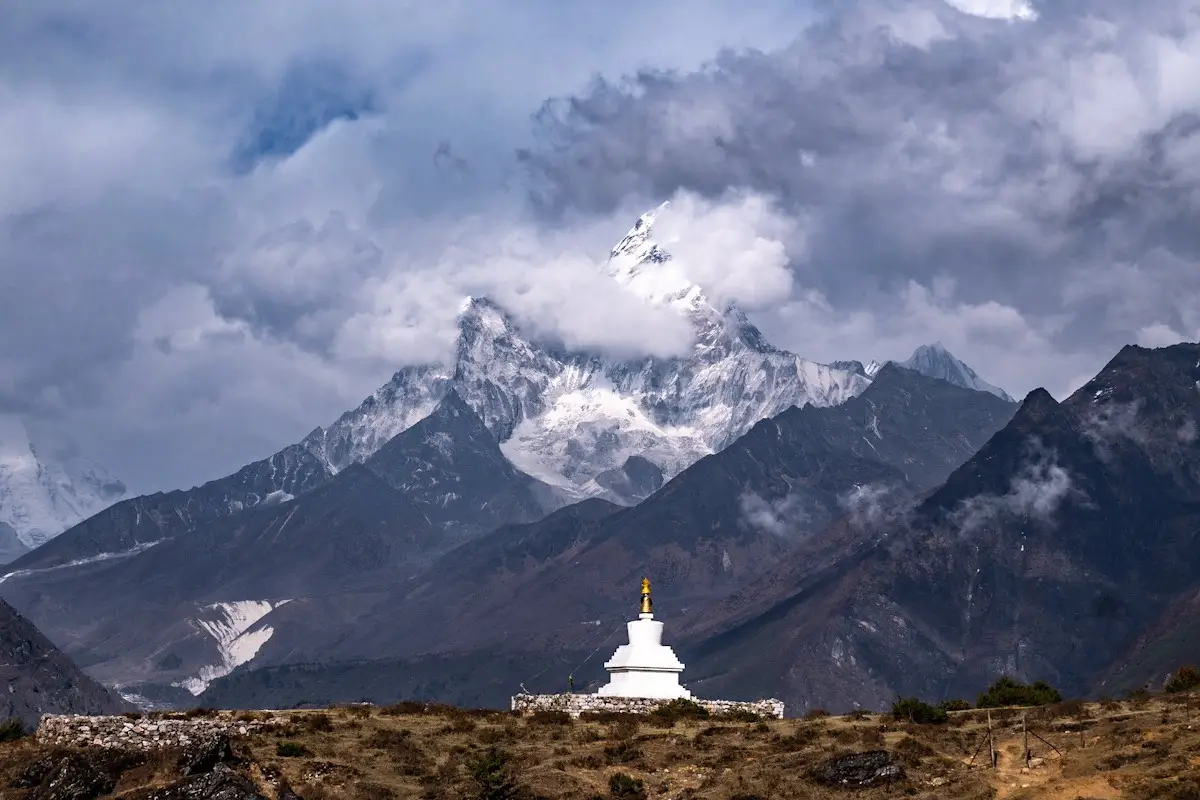
Nagarkot lies at an altitude of around 2,175 meters and is known for its sunrises, sunsets and Himalayan panoramas. In clear weather, it is even possible to see Everest from here. From there, we continued via Namobuddha to Dhulikhel. Namobuddha was completely different from the busy Kathmandu – quiet, modest and spiritual. We visited a Buddhist monastery, met a dog that jumped on one of our children and then followed us for a long time, and spent the night in a small mountain hotel with vegetarian food. Dhulikhel and Namobuddha left us with a completely different image of Nepal – less noisy, less touristy, but all the more inward and intimate.
Then came a long, roughly seven-hour drive to Chitwan. The landscape gradually changed. From mountain roads and views, we entered a green lowland world where the air was heavier, warmer and more humid. Chitwan National Park is one of Nepal’s best-known natural areas. It is a place of jungle, rivers, animals and Tharu villages.
We knew that this was exactly where we also had to think about the more practical side of the trip. In the southern lowland belt, there are more mosquitoes and a certain, though rather low, risk of malaria, while higher altitudes above 1,800 meters are no longer considered malaria areas. Even the preparations showed how great Nepal’s contrasts are: while in the Himalayas you deal with thin air and altitude fatigue, in Chitwan it is heat, jungle and protection against insects.
The afternoon elephant ride was not a pleasant experience for us – quite the opposite. The later photo session and the chance to touch the elephants were nicer, but overall this part left us with mixed feelings. In the morning, we went canoeing on the Rapti River, where a wet dog once again startled one of the children, and then we calmly watched crocodiles. The afternoon jeep safari was completely different – peacocks were everywhere, and the jungle was alive and exciting.
The next morning brought one of the biggest surprises of the entire trip: a safari with a rhinoceros up close and even bears. Chitwan is home to rhinos, crocodiles, many species of birds and a whole range of other animals, so in terms of nature it was one of the most interesting parts of the whole journey. Unfortunately, we did not come across a tiger; we only found a paw print in the sand. But even that gave us goosebumps – knowing that the largest living cat had walked there was not exactly reassuring.
After the jungle, we continued to Pokhara, the city beneath Annapurna. Pokhara lies at around 827 meters above sea level and has a completely different atmosphere from Kathmandu. It is calmer, more relaxed and, thanks to Phewa Lake, also wonderfully photogenic. Above it all, in good weather, rise the peaks of Annapurna and Machapuchare.
In the morning, we flew by helicopter to Annapurna, where we spent about an hour, and then returned. This was followed by a temple, the Himalayan Museum, where the boys climbed an artificial mountain, a waterfall, the city and finally rain, which significantly changed our afternoon plans. In Pokhara, we also took a trip to Sarangkot and Naudanda, which offer some of the most beautiful views of Annapurna and Phewa Lake. The next day was devoted to well-known places such as the World Peace Pagoda, Bindabasini Temple and Devi’s Falls.
The next morning, we tried to capture the sunrise over Annapurna. It was only partly visible, but even that had its own charm.
From Pokhara, we flew back to Kathmandu, because the journey by car would have taken about nine hours. The driver who had taken us to Pokhara drove our luggage all the long way back by road, but first he waited until we had actually taken off. In Nepal, it is quite common for a flight simply to be canceled.
Honestly, after everything we knew about Nepalese aviation, we were almost hoping that this flight would be canceled too. Air travel in Nepal does not have the best reputation, and one naturally has a lot of respect for such a domestic flight. And after the landing, during which we were praying that we would not fall just before touching down, that respect certainly did not diminish. In the end, however, we arrived safely and moved on to Gokarna Forest Resort.
This was a completely different ending from what we had experienced during the previous days. Gokarna was once a private hunting reserve of the Nepalese royal family and today it is a green, peaceful place just outside the bustle of the big city. We walked around the golf course and through the forest, where we saw monkeys and deer. After the Himalayas, temples, villages and jungle, it was a very pleasant and peaceful end to the whole trip.
On the last day, we went into the city once more, somewhat unsuccessfully searched for a Buddhist temple and even managed to visit a hairdresser before our departure.
Some moments were beautiful, others demanding, and some strange or uncomfortable. But that is exactly what made Nepal real. Not polished and comfortable, but alive, raw, spiritual and unforgettable. And that is exactly how it will remain in our memories.
Our Tips
What to Visit: Definitely the capital city, Kathmandu, as well as the mountain region – if you are already in Nepal, we believe you should see Mount Everest. Bhaktapur, Namobuddha and Dhulikhel are also definitely worth visiting. Chitwan National Park was another great experience, and it would be a shame to miss Pokhara and Annapurna.
Restrictions for Children: Nepal is a very poor and, in many respects, underdeveloped country where travelers may face many complications. It is therefore important to carefully consider how confident you feel about taking such a trip with children of any age. We managed the entire holiday smoothly, with only occasional mild stomach problems. However, we arrived really well prepared – with the necessary vaccinations, a large supply of medication and the mindset that almost anything could happen. For Nepal, the following vaccinations are particularly recommended for both adults and children: hepatitis A and B, typhoid, cholera, rabies – there really are a lot of stray dogs here – Japanese encephalitis and vaccination against meningococci A, C, W135 and Y. Honestly, we would recommend traveling to Nepal rather with older children, if only because of vaccination options, hygiene, transfers and the overall demands of the journey. We would not particularly recommend such a trip with preschool-aged children.
Food Tips: It is worth trying basically everything. Nepali cuisine is very similar to Indian cuisine, and the flavors here are completely different from those in Europe. You just have to be prepared for the fact that almost everything is genuinely spicy – sometimes even dishes where you would not expect it at all.
What Not to Do: Do not pet stray dogs, even if some of them look really cute. In general, it is better not to touch any animals. If you are not experienced travelers, we would recommend exploring cities and sights with a guide. If possible, we would try to limit domestic flights, as aviation standards here are significantly lower than in Europe. It is also important to wash your hands thoroughly, drink only bottled water and never brush your teeth with tap water. In tropical areas, it is necessary to protect yourself against mosquitoes. In general, it is advisable to inform yourself thoroughly and prepare carefully for a trip to Nepal – medically, practically and mentally. It is definitely worth it.
Nepal is a land of great contrasts. One day, you are standing before the highest mountains in the world; the next, you are walking among temples; another day, you are driving through the jungle in search of rhinoceroses, only to find yourself once again surrounded by dust, honking and endless chaos. It is not always an easy country to travel through, but that is precisely where its strength lies. Nepal can tire you out, surprise you and sometimes overwhelm you, yet at the same time it reveals a world completely different from the European one. And that is exactly why it is one of those places you never forget.
More photos can be found at Gallery - Nepal